
This is Seamus. He faithfully keeps watch at our door and carefully checks all who come and go. Who needs a video surveillance system when you have such a dedicated gatekeeper?
In Psalm 24, we encounter a different doorway with its own group of gatekeepers. As the Ark of the Covenant approached Jerusalem in a joyful procession, the gates became the focus of attention. The guardians at these gates were not watchful cats, but priests. These priests were entrusted to prepare the way for the arrival of the King of Glory. Their role was not merely to guard the entrance, but to call on God’s people to recognize His holy presence and welcome it among them.
(Reading time – 8 mins)
The procession arrived at the gates of Jerusalem. Priests carried the Ark. People were singing in celebration. The gates of the city stood tall, but the doors were closed! For a moment the raucous crowd and the dancing King David were stilled and silenced as they awaited entrance into the royal city.
There was an exchange between two priests. One priest was attending the Ark of the Covenant at the head of the celebratory procession, and the other was watching the procession from the city gate. Here is their exchange.
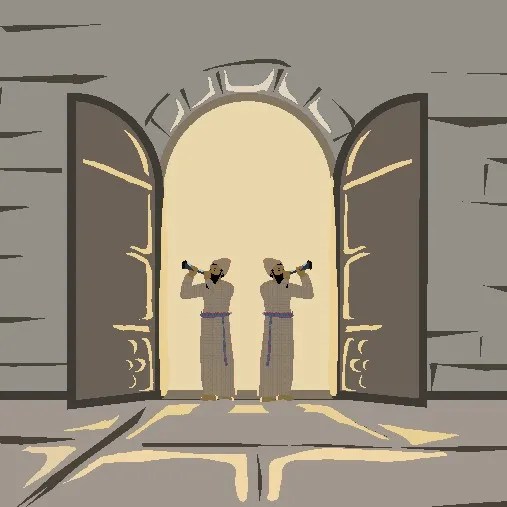
7 Open up, ancient gates!
Open up, ancient doors,
and let the King of glory enter.
8 Who is the King of glory?
The Lord, strong and mighty;
the Lord, invincible in battle.
9 Open up, ancient gates!
Open up, ancient doors,
and let the King of glory enter.
10 Who is the King of glory?
The Lord of Heaven’s Armies—
he is the King of glory.
The priest calling out from the head of the procession requested that the gates be opened to allow the King of Glory to enter. The gate priest responded by requesting identification: who is this King of Glory? It’s a rhetorical question. The questioner knew full well who the King of Glory is.
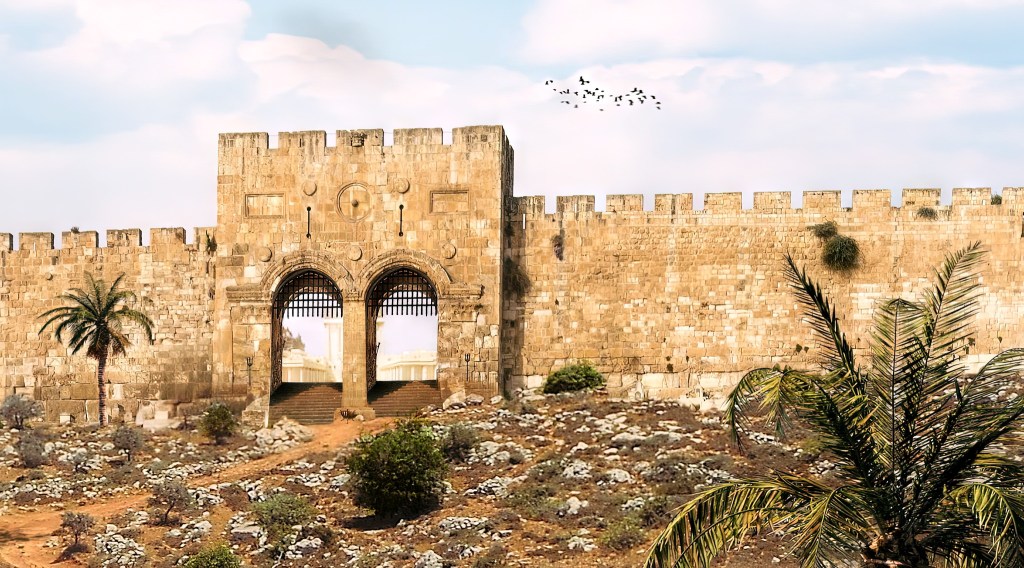
Psalm 24 refers to the gates as “ancient” gates. They have been around since the beginning. Gates and doors are entry points into spaces, whether it’s going inside or going outside.
Gates as Meeting Places
In ancient near Eastern culture, doors were often made of wood or stone and could be reinforced with metal for added security. They were typically secured with bolts or bars. The construction and maintenance of doors and gates were vital for the safety and function of both homes and cities.1 To control the gates of one’s enemies was to conquer their city. Part of Abraham’s blessing from the Lord was the promise that “your offspring shall possess the gate of his enemies” (Gen. 22:17).
Under Moses’ law, parents of a rebellious son were told to bring him to the city gate, where the elders would examine the evidence and pass judgment (Deut. 21:18-21). In the book of Ruth, Boaz officially claimed the position of kinsman-redeemer by meeting with the city elders at the gate of Bethlehem to settle the legal matter of his marriage to Ruth (Ruth 4:1-11).
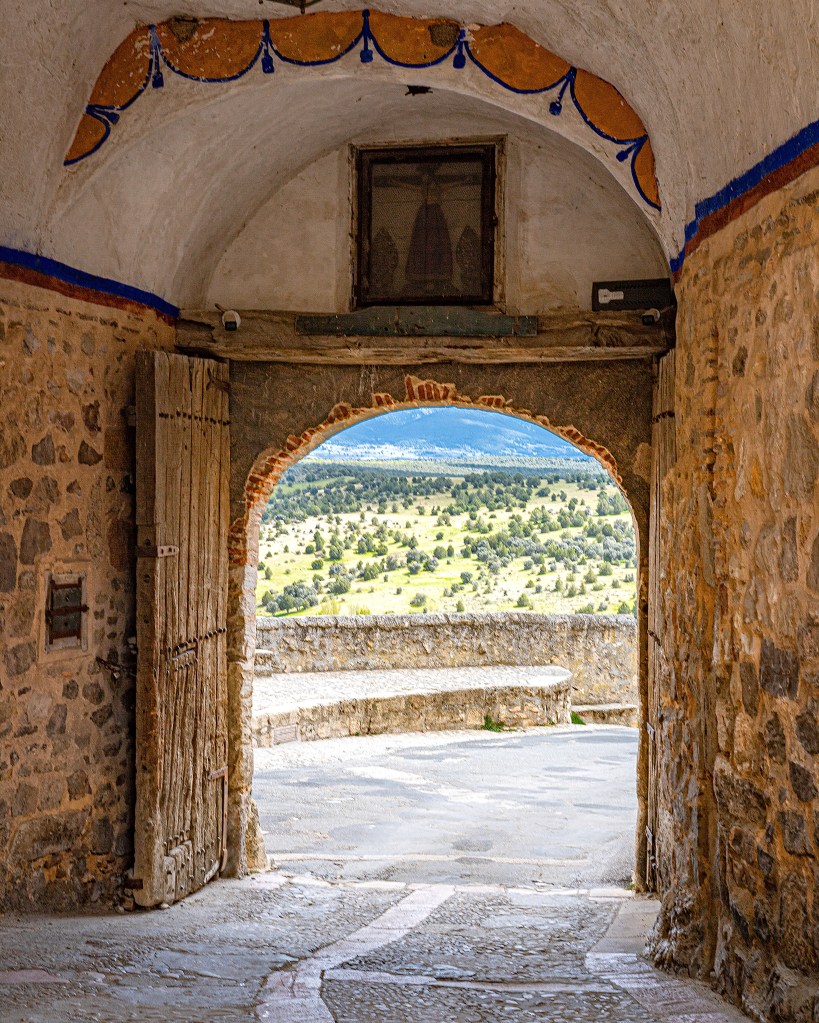
In Proverbs 1, wisdom was personified: “At the head of the noisy streets she cries out, in the gateways of the city she makes her speech” (v 21). To spread her words to the maximum number of people, wisdom took to the gates. As Israel combatted the Philistines, the priest Eli waited at the city gate for news regarding the Ark and to hear how his sons fared in the battle (1 Sam. 4:18).
In biblical times, the city gates were centres of activity. They were where important business transactions were made, court was convened, public announcements were heralded and a key point of the city’s defense.
Doors as a Thresholds
In addition to being centres of activity, gates and doors acted as key access points or thresholds. One of the first places this is mentioned in the Bible is in Noah’s Ark. The description of how Noah is to build the boat included a big emphasis on putting a door in the side of the Ark. It’s the word petah, which means opening or entrance. God made a covenant with Noah that he and his family will enter the ark for the preservation of life. It’s very clear – when you are in this little refuge with a bunch of animals living at peace there will be life, but outside the door there will be chaos.
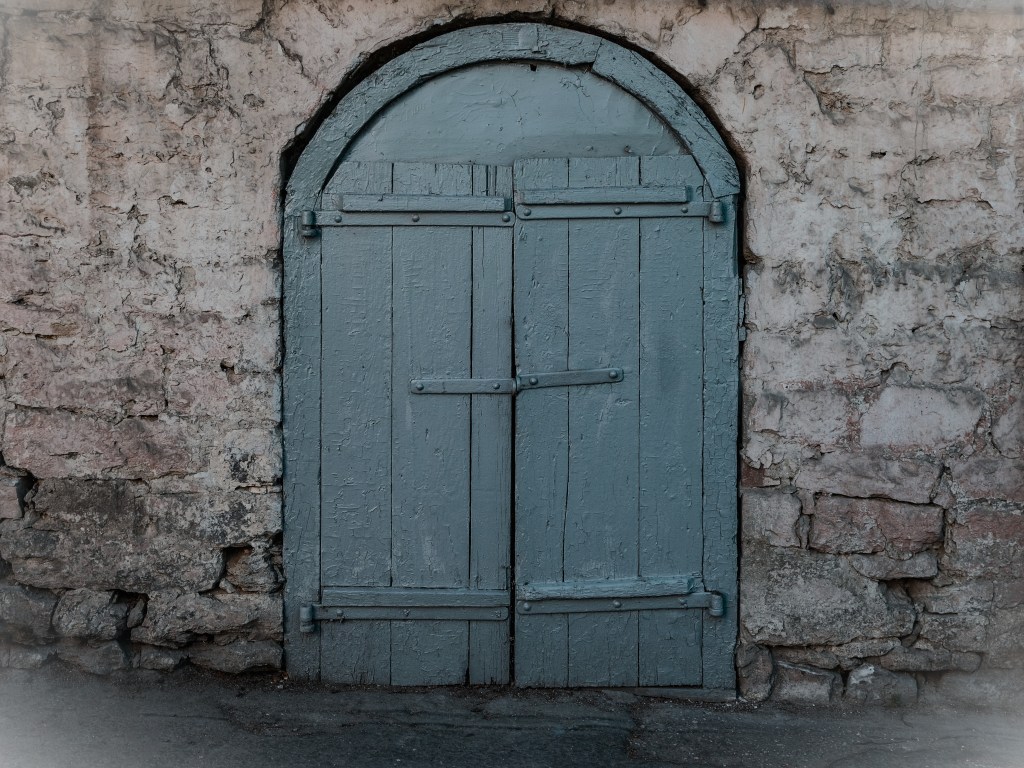
There is also the door to Lot’s house. The door was guarded on the inside by two angels. Outside of the door it was dark, and a group of men waited to violently abuse the people inside the house. When Lot almost got hurt as he exited his house, the two angels inside the door grabbed him and pulled him back inside and closed the door. Then the angels struck everybody outside the door with blindness. It all happened at the door. Chaos on outside and safety on the inside.
Passover is characterized by the blood-marked door which became a place of salvation and protection from the plague of the death angel.
In moments when darkness overshadowed human communities, God provided small Eden-like sanctuaries: Noah’s ark, Lot’s house, and the Passover homes.2 These became places of shelter and hope amid judgment. The door stood as a reminder that God’s invitation required a response. People had to decide whether they would trust God’s provision and step inside.
Jesus as the Door
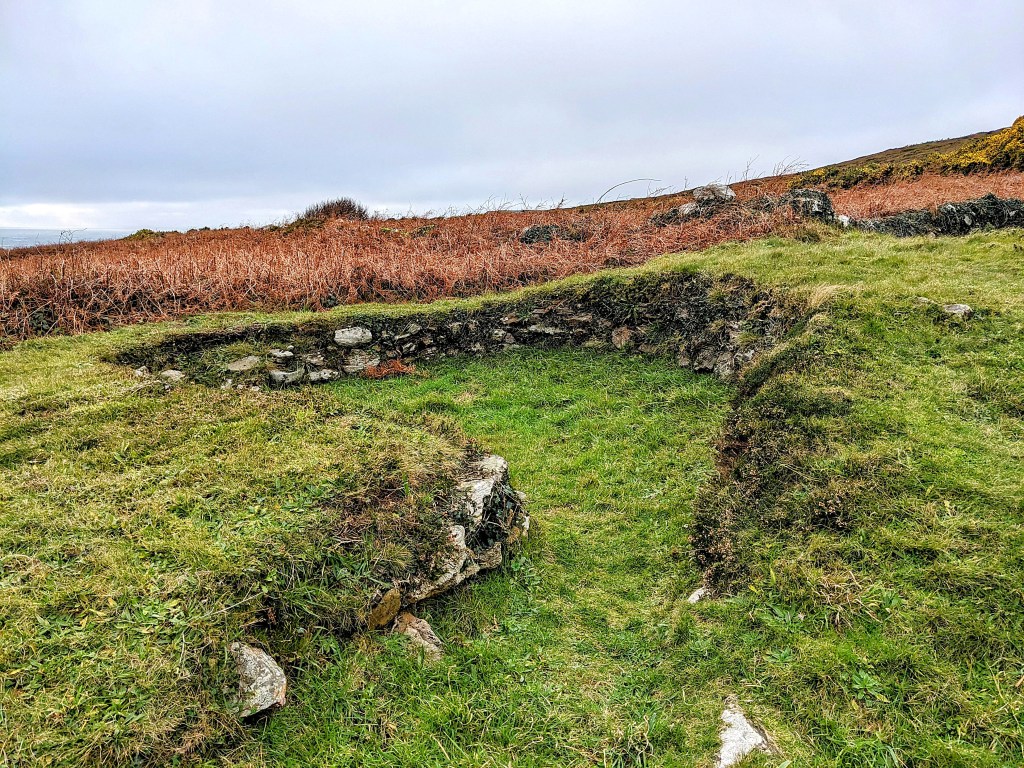
In the New Testament, Jesus declared that he is the door (John 10:7-10) – that he is the only access to life. Jesus was referring to the sheep pens in the countryside, where the shepherds would keep their flocks. This type of sheep pen was a rough circle of rocks piled into a wall with a small open space to enter. The shepherd would drive the sheep through it at nightfall. Since there was no gate to close—just an opening—the shepherd would keep the sheep in and wild animals out by lying across the opening. He would sleep there and literally become the door to the sheep pen.3
Jesus was saying that, as the door, he provides access to salvation and eternal life. There’s safety in him. There’s provision in him. There’s care in him. Because for a sheep, it’s a good thing to find a pasture, and it’s also a good thing to be protected from wild animals.
This access to salvation found only in him is what Jesus goes on to call “abundant life.” Jesus is the door – the one and only access point to God.4
In his list of blessings to the nation of Israel for their obedience, Moses included, “You will be blessed when you come in and blessed when you go out” (Deut. 28:6). There is safety (protection) inside and pasture (provision) outside.5
Waiting or Lurking
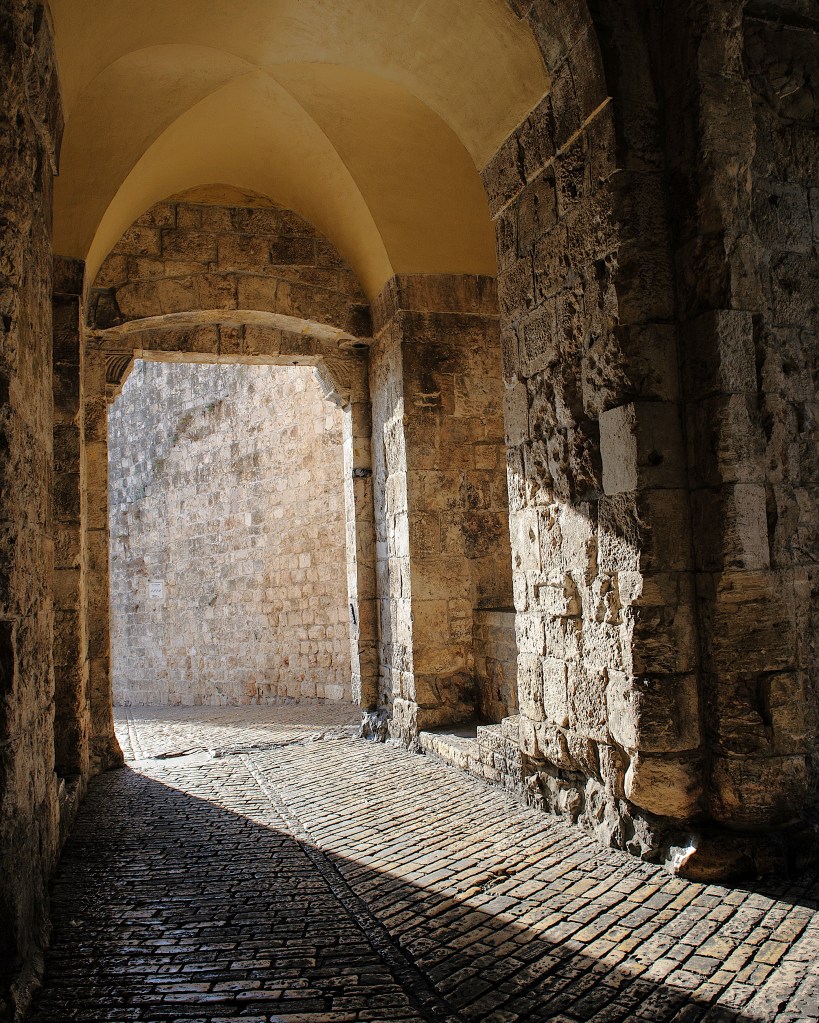
The story of Psalm 24 is about the King of Glory who invites people to come into his city, his home, to be in relationship with him. He doesn’t kick the door down. He knocks, invites, and waits for a response. “Look! I stand at the door and knock. If you hear my voice and open the door, I will come in, and we will share a meal together as friends” (Rev. 3:20). The King of Glory invites humanity into an intimate relationship.
Like the priest keeping watch at the locked city gates, we need to be alert. There is another looking to gain entrance. In contrast to the God who knocks, invites and waits for a response, this one lurks in the shadows. Cain was warned by God at the guarded entrance to Eden that “sin is crouching at your door; it desires to have you, but you must master it.” (Gen. 4:7).
Both verses deal with the door metaphor. The contrast could not be greater at this threshold – God, the King of Glory, announcing his arrival with an invitation to an Edenic relationship, or sin crouching at the door, lurking silently in the dark, waiting for an opportunity to seize and control.

At the beginning of this post, I introduced our guard cat, Seamus. While he often sits attentively by the door, he is usually not guarding the house as much as waiting for a chance to get outside. Occasionally, he slips through an open door and ventures into the world beyond. Yet it does not take long for him to realize that the outdoors is not quite the Eden-like paradise he imagined. Soon he is found at the nearest door, looking for a way back into the safety and comfort of home.
Decisions, Decisions
Throughout Scripture, doors remind us of God’s gracious invitation to draw near. They mark the threshold between the ordinary and the holy, calling us into God’s presence and purposes. As we encounter this image in God’s Word, may we accept the invitation and step across the threshold to an abundant life and relationship with him.
Up Next
The next post will explore the title, King of Glory. What exactly does glory mean?
Notes:
- https://biblehub.com/topical/t/the_doors_and_entrances.htm
- Bible Project, Sermon on the Mount Series, Episode 34, August 26, 2025.
- https://www.gotquestions.org/I-am-the-door.html.
- https://www.crossway.org/articles/why-does-jesus-call-himself-the-door/.
- https://www.gotquestions.org/city-gate.html.

