
What is the most memorable parade you have attended? Was it a large celebratory procession? Or maybe a community festival? What was being celebrated? What were you waiting to catch a glimpse of during or at the end of the procession? Was it a celebrated dignitary? Maybe your favourite sports team with their championship trophy or Santa Claus and his reindeer?
(Reading time 11 min.)
Grapes and Drums
Growing up in the Niagara Region of southern Ontario, we were treated to weeklong festivities in late September in celebration of the grape harvest. One of my personal favourite highlights of the festivities was the Grape and Wine Festival Grande Parade that took place on the Saturday morning – rain or shine. Living very close to the parade route, I was guaranteed a front row seat.
The procession would continue for over an hour with a full complement of marching bands (including my favourite – bagpipes), twirling baton troupes, dignitaries in classic cars, grape themed floats, and let’s not forget the Grape King and Queen. The Grape and Wine Festival procession ended with live music performed by a steel drum band all the way from Trinidad and Tobago!
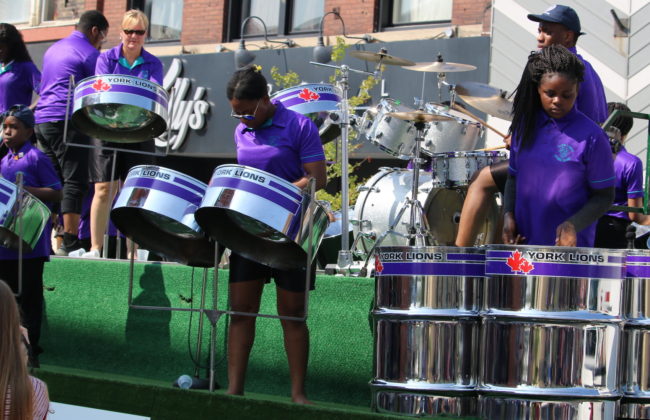
What does a steel drum band have to do with grapes? The City of St. Catharines, which hosted the parade, is twinned with Trinidad and Tobago. Among the many parade entries from near and far, the steel drum band was Trinidad and Tobago’s parade entry. What better way finish a parade than with live, celebratory music.
Psalm Processions
Psalm 24 is about processions. Many commentators believe that Psalm 24 was written by King David as he led the procession of the ark of the covenant when it was moved from its temporary home in Kiriath Jearim in the house of Abinadab to a permanent home in Jerusalem. Psalm 24 may also have been used to accompany a military procession as the victorious king returned from battle.
What was the ark of the covenant? It was a special box God told Moses to make which carried the tablets with the ten commandments, a jar of manna and Aaron’s rod. It was the most sacred object in Israel and represented God’s presence among the people. It was a national treasure!
If I were to attempt a contemporary parallel, think of what it would mean to Toronto Maple Leaf fans if they won the Stanley Cup. Over fifty years of waiting for the holy grail of hockey to return to Toronto. Imagine the procession that would accompany that trophy! What celebration! What noise! What relief!
Context
Psalm 24 is in Book I of the Psalms. The Anticipation post noted that at the centre of Book I there is a collection of poems (Ps. 15-24) that open and close with a call to covenant faithfulness – God makes promises to his people and asks them to be faithful to him.1 Psalms 15 and 24 ask and answer the same question: who can enter God’s presence? This is a major theme of Book I and a core theme of the entire Old Testament.
Let’s have a look at Psalm 24!
A psalm of David.
1 The earth is the Lord’s, and everything in it.
The world and all its people belong to him.
2 For he laid the earth’s foundation on the seas
and built it on the ocean depths.
3 Who may climb the mountain of the Lord?
Who may stand in his holy place?
4 Only those whose hands and hearts are pure,
who do not worship idols
and never tell lies.
5 They will receive the Lord’s blessing
and have a right relationship with God their saviour.
6 Such people may seek you
and worship in your presence, O God of Jacob.
7 Open up, ancient gates!
Open up, ancient doors,
and let the King of glory enter.
8 Who is the King of glory?
The Lord, strong and mighty;
the Lord, invincible in battle.
9 Open up, ancient gates!
Open up, ancient doors,
and let the King of glory enter.
10 Who is the King of glory?
The Lord of Heaven’s Armies—
he is the King of glory.
(New Living Translation)
Psalm 24 is a hymn of praise to God who is celebrated as the King of Glory. The ten verses of Psalm 24 can be divided into three parts:
(1) affirming God the creator (vv. 1-2);
(2) who can stand in God’s presence (vv. 3-6); and,
(3) God’s entrance to the city as victorious conqueror (vv. 7-10).
Insertion
One of the techniques used in writing Hebrew poetry is called insertion. Bruce Waltke described this approach as one literary unit inserted into another. “In the midst of developing one thought the psalmist may suddenly throw in another.”3 Psalm 24 is an example of insertion. After verses 1-2 affirmed the King of Glory as the creator, we might expect this king to make his triumphal entry into the city (vs. 7-10). Instead verses 3-6 introduced something entirely different. The king’s people entered the city with him. Who are the people who entered with him? The people accompanying the king are the righteous! The verse 3-6 section was inserted as a new thought. After presenting the new thought, David continued with the triumphant entry of the king.4
Clusters
If we approach the Psalms as a carefully arranged literary work, we can look at an individual psalm next to its neighbours or as part of a cluster of poems. Understanding the message or story of the entire cluster brings insight that might have been missed if the poem was read in isolation. It’s like looking at an individual grape instead of at the entire cluster.

Psalms 15 and 24 were previously noted as bookends for a group of ten psalms. Within these ten psalms there are parallels, progression and a storyline. In her book, The Arrival of the King: The Shape and Story of Psalm 15–24, Carissa Quinn interpreted Psalms 15–24 as a sequence and a chiasm, showing links in adjacent and parallel psalms.
Chiasms
What is a chiasm? This might get a little nerdy but stay with me.
A chiasm is a literary technique where a series of ideas is presented and then repeated in reverse order. The result is a “mirror” effect as the ideas are “reflected” back in a passage. Each idea is connected to its “reflection” by a repeated word, often in a related form. The term chiasm comes from the Greek letter chi, which looks like our letter X.5
The structure of a chiasm is usually expressed through a series of letters, each letter representing a new idea. For example, the structure ABBA refers to two ideas (A and B) repeated in reverse order (B and A). Not to be confused with the Swedish pop band from the 70s and 80s with the same name. Often, a chiasm includes another idea in the middle of the repetition: ABXBA. In this structure, the two ideas (A and B) are repeated in reverse order, but a third idea is inserted before the repetition (X). By virtue of its position, the insertion is emphasized.6
The chiastic structure can be simple (two ideas) or more complex (multiple ideas). The structures can be presented in an indented format to help visual learners like me. Here is an example of chiasm with three ideas reflected back around a central idea.

A chiasm can be found over several verses in a chapter or across several chapters in a book. Quinn suggests that Psalms 15-24 form a chiasm that can be visualized as follows:7
A: Psalm 15 – who may enter God’s presence
B: Psalm 16 – joy and trust
C: Psalm 17 – distress and praise
D: Psalm 18 – the king’s deliverance
X: Psalm 19 – praising God’s creation and the Torah
D: Psalms 20–21– the king’s deliverance
C: Psalm 22 – distress and praise
B: Psalm 23 – joy and trust
A: Psalm 24 – who may enter God’s presence
The psalm cluster has a sense of progress, beginning with the question of who may ascend the holy hill (Ps. 15) and finishing with the divine King’s own ascent (Ps. 24). Quinn argued that the themes are also expanded and intensified as they are reflected in the second half of the chiasm.
The predominant theme in this cluster was God’s presence. Psalms 15, 19 and 24 framed the cluster with the goal of entering God’s presence. Psalm 15 asked the question of who may enter God’s presence, and then answered that it was the righteous person. Psalm 19 advanced the theme of God’s presence by showing that a person may become righteous by aligning themself with God’s creation (vv. 2-7) and Torah (vv. 8-11), and through forgiveness from sin (vv. 13-14). 8
Psalm 24 brought the cluster to a grand finale with the most dramatic intensification of God’s presence throughout the collection. Those who sought God’s presence were gathered waiting in anticipation, and the King of Glory arrived to dwell with his people forever.
“He is the king (vv. 7-10) who reigns among all his people (v. 6) in his cosmic temple (vv. 1-2, 7, 9).” 9
Psalm 15 asked the question, who may enter God’s presence? Psalm 24 reflected the question back by sandwiching it between two attributes of the God whose presence we sought – God the Creator and God the Conqueror. The poems between Psalms 15 and 24 painted a picture of the God whose presence we sought. In Psalms 16 and 23, God’s presence was satisfying and provided security in times of distress. In Psalms 17 and 22, the poet was praying for God to come near and provide refuge. In Psalms 18 and 20-21, God responded to the distress call and brought deliverance. Psalm 24 celebrated the fulness of God’s presence in a grand procession.
The Psalm 15 to 24 cluster itself was a procession preparing the way for the King of Glory. He is set apart as holy (Ps. 15); he is LORD, provider and sustainer (Ps. 16:2); glorious judge (Ps. 17:2-5); saviour (Ps. 17:6-15); warrior rock and redeemer (Ps. 18); creator (Ps. 19:2-7), lawgiver (Ps. 19:8-11); he has power to acquit (Ps. 19:13-14); he brought the victory of the king (Ps. 20-21). Like different floats in a parade, each of the poems drew attention to various attributes of God. At the end of the procession, the parade concluded by proclaiming God’s glory throughout the entire earth (Ps. 24:1-2) and his dominion as the glorious king who rules all nations.10
with or without insertion
Without the insertion of vv. 3-6, Psalm 24 might be describing a king or leader who demanded respect and allegiance yet did not really care about their subjects. This leader wanted to show off their greatness and their strength. I picture military parades in countries under dictatorships. The constituents gather out of duty and fear, not out of awe or wonder. The procession of military personnel and machinery is intended to show power. The leader at the end of the procession is elitist, surrounded by protective barriers and the common people are kept at a distance. The leader may not even be in the parade, just watching from a secure position.
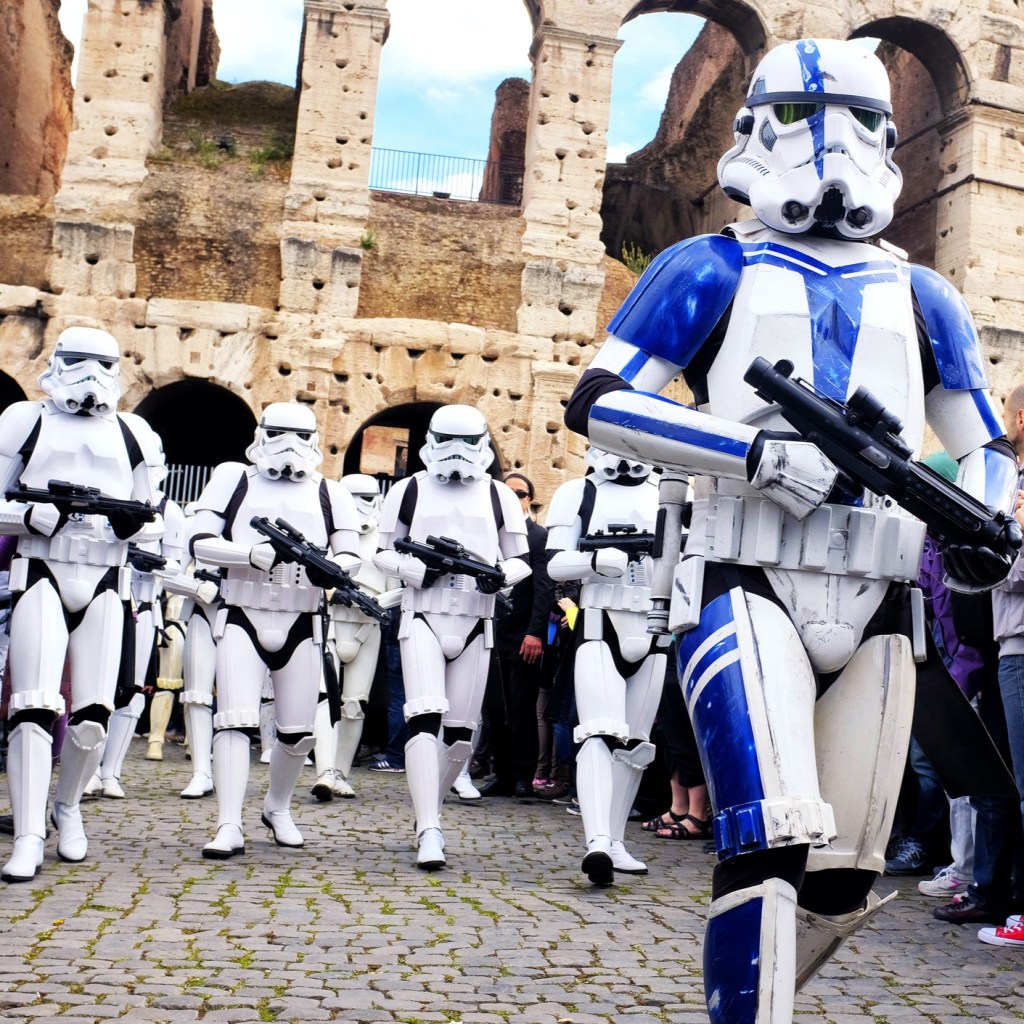
In the Psalm 24 insertion of vv. 3-6, God invited us into relationship with him. On each side of the insertion, we celebrate the amazing creator (vv. 1-2) who has been victorious on our behalf (vv. 7-10). Through his son, the suffering Messiah (Ps. 22), the King of Glory has delivered the people he created so that they may once again enjoy his presence.
The Psalm 15 to 24 collection is the story of redemption. What began in Psalm 15 as an individual seeking God’s presence culminated in God himself showing up and inviting all people to join him in his presence. With the insertion of vv. 3-6 in Psalm 24, the King of Glory invited us to come and join him and walk with him in the grand procession to its glorious destination.
Check it out

In addition to the many Grape and Wine Festival Grande Parades, I had front row seats to a Stanley Cup parade in 2010 when Chicago Blackhawks Brian Bickell brought the cup to Orono, Ontario! A Grande Parade with small town flavour. I waited a long time for this. There’s hope for Maple Leaf fans!
Up Next
The Ark theme in Psalm 24
Notes:
- BibleProject Transcript, The Book of Psalms
- T.M. Suffield, The Plot of the Psalms
- Bruce K. Waltke and Fred G. Zaspel, How to Understand and Read the Psalms, (Wheaton: Crossway, 2023) 416.
- Waltke 416.
- Got Questions – What is a chiasm/chiastic structure in the Bible?
https://www.gotquestions.org/chiasm-chiastic.html - Got Questions
- Carissa Quinn, The Arrival of the King: The Shape and Story of Psalm 15–24, (Bellingham: Lexham Press, 2023) 121.
- Quinn as quoted in Cateclesia Forum, February 8, 2024.
- Cateclesia Forum, February 8, 2024.
- Cateclesia Forum, February 8, 2024
 Head and Heart Collide