Imagine having to leave a concert at the intermission, or a sporting event at the midway point while your team is losing. Imagine watching Part 1 of a movie trilogy but not seeing Parts 2 and 3. What if Tolkien would have ended Lord of the Rings after the first book, The Fellowship of the Ring. The Fellowship is dispersed. Gandalf, their leader, has fallen. Things appear hopeless. How will Frodo and Sam carry on the quest to destroy the ring without the rest of the fellowship?

Similarly at the end of the Psalms Book III, we found the exiled Israelite nation in a state of hopelessness. Where will they turn now? How will they respond to their current situation?
(Reading time 11 mins.)
Book IV – The Remnant Remembers
Book IV begins with the only psalm written by Moses one thousand years earlier. In response to the Book III crisis of exile, the Israelites looked to their roots through one of Moses’ prayers. In the first psalm of Book IV (Ps. 90) Moses prayed the same way he did when he was on Mount Sinai after the Israelites turned from God to worship the golden calf because they became impatient waiting for Moses to come down from the mountain. Moses called on God to show mercy to the Israelites.

The poets of Book IV remembered the generation of Israelites who left Egypt but never entered the promised land of Canaan. Because of their of lack of faith in God to bring them into the promised land when it was first spied out, the Israelites were destined to wander in the desert for forty years and would not experience the land flowing with milk and honey. Just as the first generation of Israelites out of Egypt suffered in the desert, so the Psalm 106 generation at the end of Book IV, also suffered.
While Book IV is a book of despair, like Book III, there is hope that God will rescue the Israelites and fulfill his promise to David. The centre of the book (Ps. 92 to 100) proclaims that the god of Israel is the true king of the world. All creation, trees, mountains, and rivers are summoned to celebrate the future day when God will bring his justice and kingdom all over the world.1 Book IV expanded the view of God’s sovereignty beyond Israel to include all nations.
Book IV focused on the people – their collective despair over their past sins and their hope for rescue. Suffield suggested that we could compare this period to Lent.2
Book V – Return of the King
The story told in the first four books now moved to a conclusion in Book V. The book began by celebrating the Israelite nation’s return from exile (Ps. 107), and it ended with Psalm 145, an acrostic poem praising God the King who had led them out of exile. The poet called on all nations to bless his holy name. He is a king not only for the Israelites – he is the Davidic Messiah, a King to rule all of creation.
Suffield notes that most of the psalms written by David that are outside of Books I and II are found in Book V. David was portrayed again as the King to the exiled Israelites and the returned people as well as the Messianic hope. The anticipated salvation will come from a new David.3 The hints of hope from Book IV are shown in their full glory in Book V.
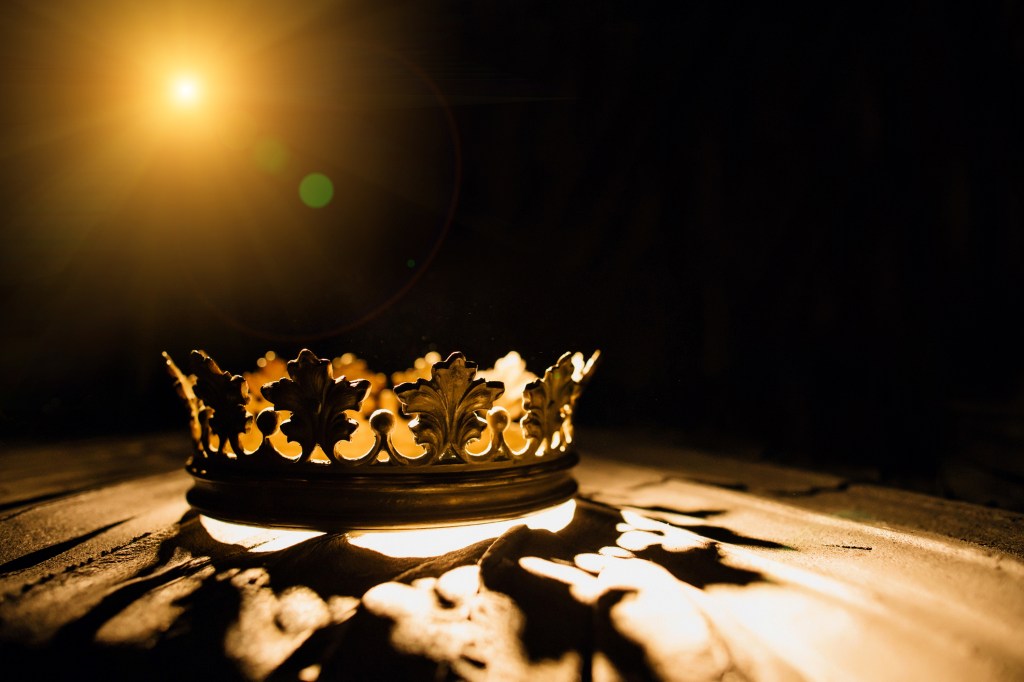
The anguish of exile was overcome in the hope for the future Messiah. Book V contained two larger collections that expressed a strong messianic hope – one called the “hallel” (Ps. 113 to 117) which described the original Passover story, and the other called the “songs of ascents” (Ps. 120 to 134) which were sung by the Israelites as they made their pilgrimage back to Jerusalem. The “hallel” collection reminds us of God’s deliverance, and the “songs of ascents” shows us that the reason for returning from exile is to hear God’s word in the Torah. Each of these collections ended with a poem about the future Messianic kingdom.
Sandwiched between the two collections is the longest psalm, Psalm 119, which is an alphabet poem. Each line begins with a new letter of the Hebrew alphabet, and it remembered and explored the wonder and the gift of the Torah as God’s Word to his people. The Psalm 1 and 2 themes of Torah and Messiah are combined in Book V.4
Book V came into being shortly after 537 BC. It appears that Books IV and V were combined with Books I to III, and then concluded with the inspired composition of Psalms 146 to 150 as a grand hallelujah for the entire book. Since this last writing occurred in 444 BC at the time of Ezra’s proclamation of the written law and reform of the temple worship (Neh. 8 to 10), it may well be that Ezra himself executed the final compilation of the book (Ezra 7:10).5
Hallelujah Cluster
The five-fold group of “hallelujah” songs (Ps. 146 to 150) brings the Psalter to an appropriate conclusion of exuberant praise. Who would have thought this was possible if we stopped reading at the end of Book III? In the middle of this group in Psalm 148, all creation is summoned to praise the God of Israel because “he has raised up a horn for his people.” The horn is a metaphor of a bull’s horn raised in victory. The image is also used in Hannah’s song (1 Samuel 2) and in Psalm 132, and it is a symbol for the future Messianic King and his victory of evil.6
The Story
The previous post, Anticipation, showed David struggling to become king of Israel in Book I, followed by Solomon leading the Israelite nation to its most glorious years in Book II. The failure of the subsequent kings resulted in the fall, destruction, and exile of the nation in Book III. Looking back to the intercessor Moses, Book IV found an answer to the despair of exile while Book V exulted in praise for the certainty that God will fulfill his covenant in a future Davidic King who will rule not only Israel but the entire world. Books IV and V are more heavily loaded with praise poems compared with Books I to III. In this way the book of Psalms moves from lament to praise.

Book I centred on David’s life and God’s covenant promised to him and Book V ended with the promise of a future David. The story of David became the story of Israel, and the story of Israel became the story of God’s purposes for all nations – the story of redemption through the Messiah. The story of the Psalms is woven throughout the scriptures. It’s the story of the Israelite exodus out of Egypt to the desert wandering and culminating in the conquest of Canaan. It’s the story of the Passion Week, from the Palm Sunday triumphal entry to Jesus’ crucifixion and resurrection. The story of redemption is the biblical story from Genesis 1 to Revelation 22, and it is also the story of the Psalter.
Two Questions
The exuberant praise that concluded the Psalms (Ps. 146 to 150) stands in stark contrast to the depths of despair at the end of Book III. Nancy deClaisse-Walford commented that the Book III despondency was a necessary ingredient to the five-fold “hallelujah” poems that conclude the Psalter,
“But this ‘unfettered’ praise is only possible at the end of the story of the Psalter. The postexilic community must understand where it has come from (the ‘Who are we?’) and where it is going (the ‘What are we to do?’) before it can participate in the praise of YHWH the king. Thus, the story of the Psalter becomes a story of survival in the changed and changing world with which the postexilic Israelite community is confronted.”7
Frederick Buechner noted two similar questions that God asked Adam and Eve after they ate the forbidden fruit. God came walking through the cool of the day and asked them: “Where are you?” and “What is this that you have done?”
Humanity has been asking the same questions ever since.
“Where are you?” speaks to the present. Adam and Eve are hiding, that’s where they are. “What is this you have done?” speaks to the past. What did they do to get this way? Because of who they are and what they have done, this is the result. There is no undoing it. There is no going back to the garden. This is a matter of God honestly confronting Adam and Eve with the consequences. This is the same story of the Israelite community that wandered the desert for forty years, and it’s the same story of Israelite nation living in exile. God confronted them with their decision to discard his wisdom in favour of their own.
But then there comes the end of the story where God with his own hands makes Adam and Eve garments and clothes them. It is the most moving part of the story. They can’t go back but they can go forward in a new way – clothed with a new understanding of who they are and a new strength to draw on for what lies before them to do now.8 The postexilic Israelites also move ahead in a changed world drawing their strength on the hope of the future Messianic King.
Two Hands
Those who have studied the Psalms observe that there are five books of the Psalms and five books of the Torah. Some commentators have correlated the themes and content of each of the Torah books to the corresponding Psalm books. For example, Genesis, the first book of the Torah, has a theme of humanity and personal content, which corresponds with the story of David in Book I of the Psalms. Deuteronomy, the last book of the Torah, has the theme of the words of God and the content is prophetic, which corresponds with Book V of the Psalms.9

Eugene Peterson painted an amazing portrait in his comparison of the five books of the Torah and the five books of the Psalms. He said, “Five is matched by five, like fingers of clasped and praying hands.”10 He continued that the Torah and the Psalms are like a dialogue – listening and answering. The Torah is God speaking his words of wisdom, guidance, and instruction. God did not impose his story of redemption. He spoke to be answered. We are in a world of salvation where God is speaking to us. How do we answer him? We are not eloquent in this dialogue. The Psalms help us learn the language of response. They instruct, train, and immerse us in the answering speech which is our part in the dialogue.
The Psalms show us how to find our voice in the dialogue. We speak feelings, and we speak answers. The conversation can be both bold and devout – the utterly inferior responding to the utterly superior. The Psalms give us vocabulary that is both very personal and wide-ranging to answer everything that God speaks to us. If we truly answer God, there is nothing that we may not say to him.11
The Story
The story of the Psalms is the same story of redemption found throughout the Bible from Genesis to Revelation. It is the story of people learning to live in a changed and changing world by putting their hands together and answering the God who has first spoken to them. Now is our time to respond. The Psalms give us some language to dialogue with our creator.
Up Next
Introducing Psalm 24
Notes:
- BibleProject Transcript, The Book of Psalms
- T.M. Suffield, The Plot of the Psalms
- Suffield
- BibleProject Transcript
- Zondervan Illustrated Bible Dictionary, 2011.
- BibleProject Transcript
- Bruce K. Waltke and Fred G. Zaspel, How to Understand and Read the Psalms, (Wheaton: Crossway, 2023) 493.
- Frederick Buechner, Whistling in the Dark: An ABC Theologized (San Francisco: Harper & Row, 1988) 96.
- Charles Swindoll, Living Insights Study Bible (Grand Rapids: Zondervan, 1996) 551.
- Eugene Peterson, Answering God – The Psalms as Tools for Prayer (New York: HarperCollins, 1989) 53.
- Peterson, 54.
 Head and Heart Collide
Thanks, Henry, for taking the time to prepare these rich and meaningful posts. Much appreciated.
LikeLike