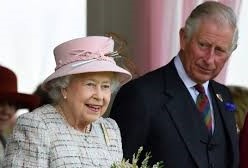
What if you could be in the room to hear the royal advice that Queen Elizabeth gave to Prince Charles to prepare him for the day when he would become king? What advice would she have provided Charles to enable him to be a wise king? While we might not know what advice is provided to the British crown through the generations, Psalm 1 gives us a glimpse of the kingly advice that David gave to his son Solomon.
(11 mins. reading time)
Psalm 1 is fundamental to the entire book of Psalms because, like a road map, it provides essential information on the two pathways to life: godly and ungodly. With rich agricultural metaphors, the author contrasts three stages in the journey of the godly and the ungodly:
- beginning – establishing direction and influence (v 1-2);
- middle – experience (v 3-4); and,
- end – final destination (v 5-6).
By laying out the entire map in six verses, the author is saying, “listen to this, it will serve you well.”
While most psalms are prayers or songs to God, there are also a handful of wisdom psalms. Psalm 1 is an example of a wisdom psalm which presents one of the major themes of the entire book – listening to the words of God.
Authorship
There are at least two theories on the authorship of Psalm 1. Since Psalm 1 is part of Book 1 (see Psalms for Nerds post), and the rest of the Psalms in Book 1 were written by David, it seems reasonable that David could have also written Psalm 1. A second explanation is that Psalm 1 was written while the Israelites were in Babylonian exile by a spirit-led scribe who combined Books 4 and 5 with 1 to 3, adding his own inspired composition of Psalm 1 as a theme song for the entire book.
Teaching Moments

While either theory seems plausible, for this blog I connect with David as the author of Psalm 1. I want to paint a picture of an intimate moment between David and one of his children – likely Solomon. It was a private and casual moment with no distractions. David had his son’s attention, not in a captive audience type of way, but in an environment which they both enjoy. In today’s world they might have been on a fishing trip or maybe on the golf course. This was an opportunity for a heart-to-heart conversation.
Stay or Stray
At the core of this wisdom psalm, David presented a life choice consisting of two pathways – the path of the godly, and the path of the ungodly. What is the basic influence that defines the two distinct pathways? While David did not spell it out here, the source of the two paths can be traced back to the temptation in the Garden of Eden. What was the temptation? To be like God but not under God. In the Garden of Eden, the serpent deceived Eve about eating the fruit from the tree in the middle of the garden by saying, “For God knows that when you eat from it your eyes will be opened, and you will be like God, knowing good and evil.” (Genesis 3:5)

The basic decision that marks the fork in the road is simple – to be connected to God or to disconnect from God and go our own way. Do we want independence from God to pursue our own objectives or do we want to be dependent on God and live the life that he planned for us. We face a daily choice to stay or to stray.
I love the way Henri Nouwen portrays this inner tension when he prays,
“I want so much to be in control. I want to be the master of my own destiny,” followed by God’s invitation, “Let me take you by the hand and lead you. Accept my love and trust that where I will bring you, the deepest desires of your heart will be fulfilled.” 1
Let’s read the entire Psalm.
Psalm 1 (New Living Translation)
1 Oh, the joys of those who do not
follow the advice of the wicked,
or stand around with sinners,
or join in with mockers.
2 But they delight in the law of the Lord,
meditating on it day and night.
3 They are like trees planted along the riverbank,
bearing fruit each season.
Their leaves never wither,
and they prosper in all they do.
4 But not the wicked!
They are like worthless chaff, scattered by the wind.
5 They will be condemned at the time of judgment.
Sinners will have no place among the godly.
6 For the Lord watches over the path of the godly,
but the path of the wicked leads to destruction.
Blessing is God’s Main Business
Notice that the Psalm started with the word “blessed”. Eugene Peterson described blessed as, “a sense of well-being, of wholeness, of happiness.” 2 ”Blessed” was the same word that Jesus used to open the Sermon on the Mount. The heart of the Father is to bless, not to curse, the people he created. God wants what is best for us. It only seems logical that God, being our designer and creator, would know how we work and what brings us joy. Often, when we are inconvenienced, disappointed, frustrated and thwarted in our circumstances and relationships, we forget the heart of God towards us. What a great way to start the Psalm by getting our focus on the heart of God.

Jesus also pointed to his Father’s heart in the Sermon on the Mount when he explains that if children ask their parents for a loaf of bread or a fish, then their parents would not give them a stone or a snake. He concluded that if sinful parents give good gifts to their children, how much more will a perfect heavenly father give good gifts to his children (Matt. 7:9-11).
“Blessing is God’s main business.” 3
Warning Boundaries
Back to David and Solomon, David began with, “oh the joys” or blessed. While Jesus started his sermon by connecting blessings with attitudes or actions, David’s approach is slightly different. He began with a series of warnings.

Why did David begin with warnings? Perhaps the reason was to reinforce that there are, in fact, two distinct paths, and each path has its boundaries. If he only affirmed the positive aspects of the godly path in verse two, one might get the impression that the godly life has no constraints or boundaries. So David provided boundaries on the godly life, not as a killjoy, but from a heart of wisdom that had seen the consequences of those who walk on the ungodly path. In essence he was saying that we cannot have one foot on each path – it’s one path or the other. We need to make clear and intentional choices to stay on the right path.
For example, if we were to go to a nutritionist for food advice, they would likely provide us with two lists: foods to avoid, and foods to enjoy. To eat healthy, there are certain foods that are on the avoid list. Eating foods from both lists would not achieve the goal of healthy eating. In the same way one foot on each path would not achieve a godly life.
Returning to Adam and Eve, God walked with them in the garden, and he provided for their needs in a relationship of love. He blessed them. He gave them security. He gave them attention and boundaries for their health and safety and for thriving in the garden. 4 God wanted the same blessings for the king and the people of Israel. But they needed to walk with both feet on a path with clearly defined boundaries. King David could easily point to the previous King Saul as an example of someone who straddled two paths – one foot on the path of listening to the people, and one foot on the path of listening to God. And the results for King Saul and his family were disastrous.
For King

One of the reasons I believe that Psalm 1 may have been a heart-to-heart conversation between King David and Solomon is from the emphasis on embedding God’s word in his heart (verse 2). It is the same advice that David would have received from Samuel prior to becoming king. When God gave Moses the instructions for ruling the nation of Israel, he anticipated that the nation would one day want a king to rule over them like their neighbours. God provided specific instructions regarding kings (Deut. 17:16-20). A major part of the instructions is that the king was to copy the law and read it daily. The goal for the king’s daily exercise of reading God’s instructions would result in the king placing God in his rightful place at the centre, and thereby making sure that the king would not act as if he was above his subjects. Choosing to follow or to ignore God’s instruction would be an indication of the king’s heart – to be under God or to be independent of God.
For Country
You might say that it’s great for a king of Israel to receive these instructions but I’m not anywhere near that position. This advice was also given to the people. Psalm 1, verse 2 is a condensed version of God’s instructions to the fledgling nation in Canaan.
“Listen, O Israel! The Lord is our God, the Lord alone. And you must love the Lord your God with all your heart, all your soul, and all your strength. And you must commit yourselves wholeheartedly to these commands that I am giving you today. Repeat them again and again to your children. Talk about them when you are at home and when you are on the road, when you are going to bed and when you are getting up. Tie them to your hands and wear them on your forehead as reminders. Write them on the doorposts of your house and on your gates” (Deut. 6:4-9, NLT)

In our church, this portion of Deuteronomy is used to encourage parents when they bring themselves and their children in a public act of dedication to God. As Moses encouraged the Israelites, and as the psalmist encouraged his readers, we encourage parents and children to embed God’s words in their heart.
God gave the same instructions to the children of Israel before they entered the promised land, “You must be careful to obey all the commands of the Lord your God, following his instructions in every detail. Stay on the path that the Lord your God has commanded you to follow. Then you will live long and prosperous lives in the land you are about to enter and occupy” (Deut. 5:32-33, NLT).

In Proverbs 4: 3-4, Solomon looked back to the conversations he had with his father, “For I, too, was once my father’s son, tenderly loved as my mother’s only child. My father taught me, ‘Take my words to heart. Follow my commands, and you will live.’” Solomon had learned about the godly path from his father King David. Solomon continued further in the chapter to give advice to his children in verses 20 to 23, “My child, pay attention to what I say. Listen carefully to my words. Don’t lose sight of them. Let them penetrate deep into your heart, for they bring life to those who find them, and healing to their whole body. Guard your heart above all else, for it determines the course of your life.” Solomon wanted his children to have life and blessings, and he knew that it would not happen without having God’s words embedded in their lives.
Reading the words of advice in Proverbs 4 that Solomon gave to his children reinforces to me that Psalm 1 was a heart-to-heart conversation between Solomon and David. The instructions found in Deuteronomy show me that these words were not only given to future kings but were advice for all people.
God’s intention has always been to bless his children from the beginning when Adam and Eve walked with God in the garden. David and Solomon walked with God by listening to his words. With this picture, Psalm 1 opens by considering what happens when we choose not to walk close but instead listen to words other than God’s.
Up Next
How do people stray from the godly path? David provides a trio of warnings to protect the godly.
Notes:
- Henri Nouwen, The Only Necessary Thing: Living a Prayerful Life (New York: Crossroad Publishing, 1999), 207.
- Eugene Peterson, As Kingfishers Catch Fire: A Conversation on the Ways of God Formed by the Words of God (Colorado Springs, CO: Waterbrook Press, 2017), 107-108.
- Eugene Peterson, 47-48.
- Bill Thrall, Bruce McNicol, and John Lynch, TrueFaced (Colorado Springs: NavPress) 2003, 135.
 Head and Heart Collide
Love this Henry. Such a great message.
LikeLike