What was happening in Israel when David came onto the scene? Where had the nation been, and where was it heading? How did this period in Israel’s history inspire the writing of the Psalms?
(11 mins. reading time)
The End of an Era
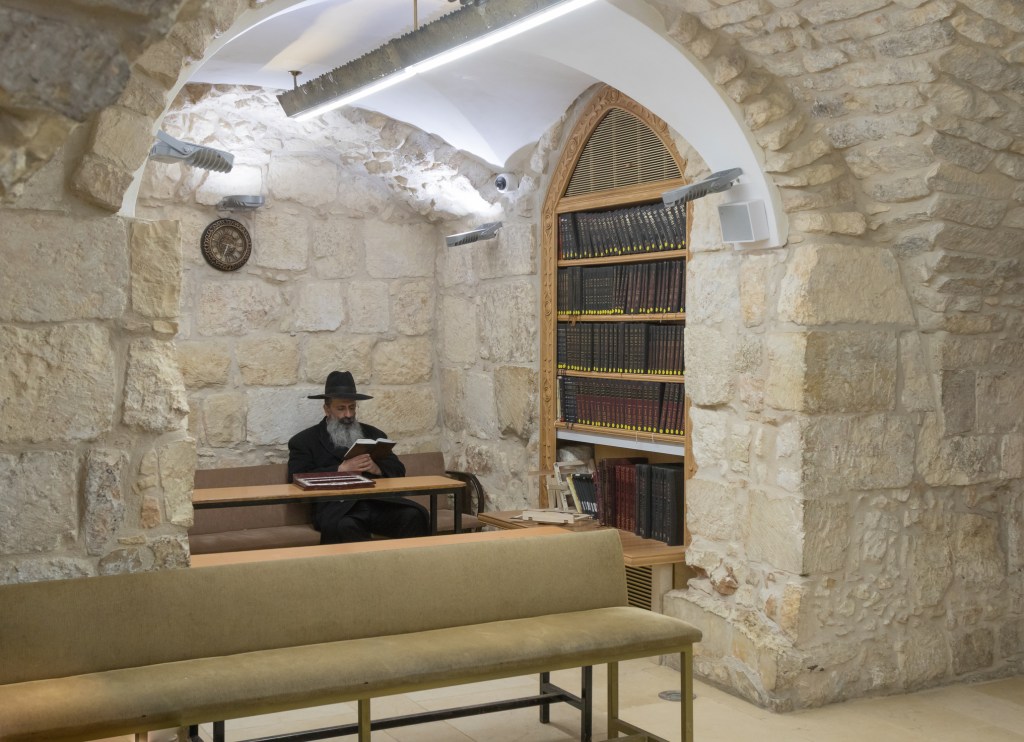
After Moses led the people of Israel out of Egypt and Joshua led them into the Promised Land, the Israelites, with God’s help, drove the Canaanites out of the Promised Land and divided that land among the twelve tribes (~1450 BC). The Judges included among others, Deborah and Barak, Gideon, Samson, and Eli. Samuel was the last of the Judges taking the place of Eli’s sons who themselves were under God’s judgment for treating the Lord’s offering with contempt (1 Samuel 2:12-17). Having the benefit of hindsight, we know that when David was born the Jewish nation was coming to the end of the Judges era, where God had selected the men and women who led the nation.
Samuel: The Last Judge
“As Samuel grew up, the Lord was with him, and everything Samuel said proved to be reliable. And all Israel, from Dan in the north to Beersheba in the south, knew that Samuel was confirmed as a prophet of the Lord” (1 Samuel 3:19-20). Samuel led the Israelites to victory over the Philistines at Mizpah. From year to year, Samuel went on a circuit from Bethel to Gilgal to Mizpah, judging Israel in all those places. As Samuel grew older, he appointed his sons as judges. However, they were not like their father. They were crooked judges who accepted bribes and perverted justice. The people were fed up with Samuel’s sons, so the elders came to Samuel and asked for a king.

The Israelites wanted a king like the kings they saw in the surrounding nations – a leader, “to lead them, go out before them and fight their battles” (1 Samuel 8:20). Though Samuel advised against a king, God told Samuel to listen to the voice of the people for they rejected God, but they had not rejected Samuel.
G. Frederick Owens summarizes those times in one sentence,
“The people were on a long drift from God.” 1
Enter King Saul
After 325 years of judges’ rule, God gave the people the king they wanted. Saul was a tall, dark, and handsome man who stood head and shoulders above the crowd. Saul started out well, but his ear was bent more on listening to what the people wanted rather than what God required. Saul’s continued disobedience to God’s instructions cost him and his family the throne. For example, at Gilgal Saul got impatient waiting for Samuel, and took it upon himself to offer the pre-battle sacrifices (1 Samuel 13). Saul was a king, not a priest, and he had no right to offer the sacrifice. On another occasion Saul went to battle against the Amalekites but spares their king and the best of the plunder contrary to his marching orders (1 Samuel 15). After these, events, God declares that he has chosen another king, someone after his own heart. David is the one hand picked by God.
King David to Ezra

After the false start with Saul, King David steered the nation on a trajectory towards greatness that reached its peak in the reign of David’s son, Solomon. But things unraveled when Solomon’s son, Rehoboam, took the advice of his good friends instead of listening to the wisdom of the King David’s advisors. The result was that the Israelites rebelled against Rehoboam’s rule, and the nation was divided into two kingdoms. Rehoboam’s diminished kingdom now included only two (Judah and Benjamin) of the original twelve tribes, and it was now referred to as Judah or the Southern Kingdom. Jeroboam, one of Solomon’s officials, became the king to the ten northern tribes which were collectively referred to as Israel or the Northern Kingdom.
In 721 BC or 374 years after Saul was anointed, the Northern Kingdom was taken into exile by the Assyrians. One hundred and thirty-three years later, in 588 BC, the Southern Kingdom was taken into exile by the Babylonians who were in turn conquered by the Persians. This marked the end of Jewish independence. Under the Persian King Artaxerxes, three companies of Israelites led by Zerubbabel, Ezra and Nehemiah were permitted to return to Jerusalem to rebuild the temple and the city around 444 BC. The temple was destroyed in 588 BC, so the nation did not have its own physical place of worship for over 144 years. The people were only permitted to resettle in some of their former land. However, this did not make Israel an independent nation.
Psalms Inspiration
The 650-year period of the kings was an unprecedented time for the nation. It also corresponded to the writing of the Psalms. The writing of the Psalms began when the nation was in a long drift from God. Under David and Solomon, the nation quickly returned to its former glory under the Judges. However, only two generations after David, the nation unraveled into two separate kingdoms. There was the occasional king who would bring the nation back under God. However, these kings were the exception and not the rule. Most of the kings were seemingly trying to outdo their predecessors when it came to abandoning the God of their ancestors and worshipping the gods of the neighbouring countries.
God sent prophet after prophet warning the people of the consequences of their sins and calling them back to Him. These warnings were not heeded and because of their repeated disobedience, God eventually handed the Israelites over to their enemies.
“Of the thirty-nine kings who ruled the northern and southern kingdoms, only eight did what was good in the sight of the Lord.”
It is over this backdrop that David and other poets and songwriters composed the poems and songs that were compiled into the book of Psalms. When we read the Psalms, they do not read anything like the Jewish Torah, or the book of the law that was available to the nations at that time. Besides the poetic writing style, what made the Psalms different was that the authors were not so much writing instructions or teachings for future generations but writing their personal prayers to God and pouring out their hearts to Him.
Tension Filled Pairs
Reading the Psalms is like being on an emotional roller coaster – in one psalm you feel like you are in the depths of despair, then in another psalm you find yourself on the heights of joy. The moods fluctuate from one end of the spectrum to the opposite end as quickly as the reader flips from one chapter to the next. How can this be?
Reading the psalms is like walking the line between tension filled pairs of:
- what life ought to be and what I am actually experiencing
- intimacy and abandonment
- distress and well-being
- lament and praise
- glory and misery
- living between the curse and the promise
If we were to extract an individual psalm and put it on its own pedestal, we would miss most of the picture. We would only see one mood of the many that form the mosaic of poems and songs. Philip Yancey remarked,
“The Psalms is not a spiritual medicine cabinet … if you feel this, then read this Psalm …” 2
We need to read all the Psalms to get the full benefit of the book. For example, try reading Psalm 102 and 103 together. In Psalm 102 we find an afflicted man who is wasting away, feeling abandoned and is pouring out his heart before God. Psalm 103 is a majestic hymn of praise for a compassionate and loving God.
So, how should we approach the book of Psalms?
In the earlier “Why Psalms?” post, I compared reading the Psalms to looking into David’s personal diary. Considering the wildly fluctuating moods, this is an uncensored look through the lens of David and the other Hebrew poets and songwriters as they genuinely wrestled with God. They wanted to believe in God’s promises, but their experience was not aligning with those promises.

As an example, David had been anointed king by the great judge Samuel, and yet he hid in the desert from King Saul, who was trying to kill him. The promise was that David would be king, but the experience was that the King was trying to kill him! David wrote several psalms either pleading for deliverance while hiding or cursing those who betrayed his whereabouts to King Saul. What about David’s close friendship with Saul’s son, Jonathan? If David was to become the King (promise) where did Jonathan fit into all of this since he was the heir apparent (experience)?
New Prayer Language
Through the book of Psalms, David and the Hebrew poets gave the Israelites language on how to pray in good times and in bad. David initiated the tension filled pairs, and they were continued by poets throughout the king’s era of Israel’s history. Before King David, the Israelites did not have these types of prayers.
For their time in exile and post-exile, the Israelites now had specific prayers that they could authentically make their own.
Jesus and the New Testament writers practiced this as well by quoting Psalms more than any other book. The Psalms provided the Israelites with a new five-part book that focused on their relationship with God in addition to the five-part book with instructions and teachings for living before God (Torah).
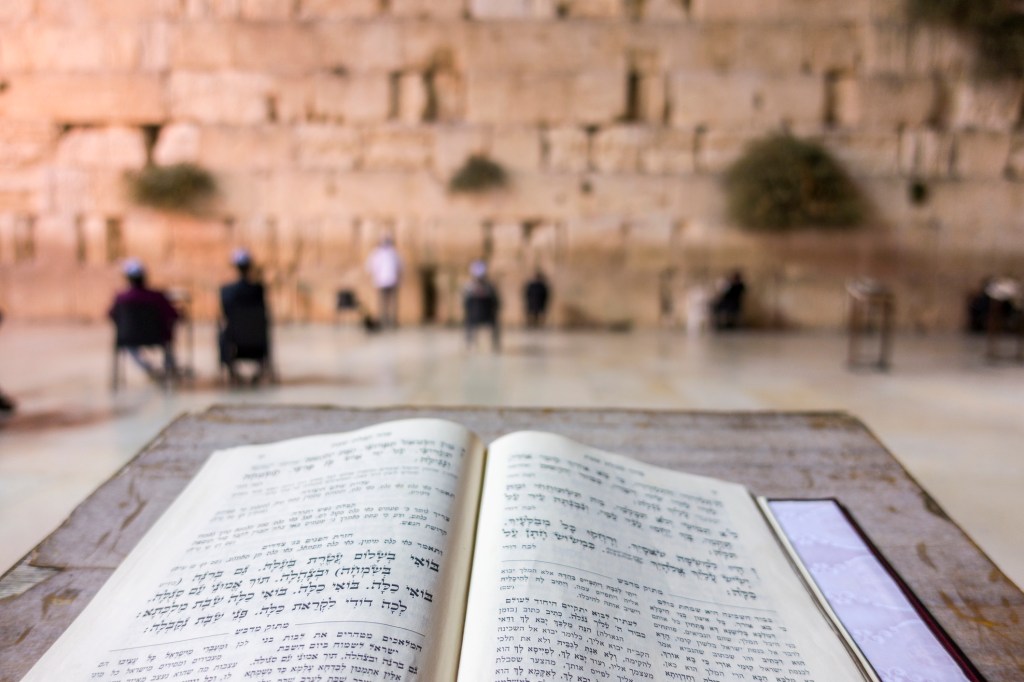
The Psalms are written as poems, not as instructions or teachings. The purpose of poetry, writes Kathleen Norris in The Cloister Walk, “is not to explain but to offer images and stories that resonate with our lives.” 3 So, I must not come to the Psalms to acquire information, but instead as a pilgrim looking for relationship with my maker. I am able to read the personal journals of people who came before me,
I am able to read the personal journals of people who came before me, “who want to believe in a loving, gracious, faithful God while the world keeps falling apart around them.” 3
I recently encountered songs that portray the tension filled pairs listening to Jon Foreman’s album, Departures. The song, A Place Called Earth, does an excellent job of conveying, “what life ought to be and what I am actually experiencing.”
Here is an excerpt,
Oh, how I long for heaven in a place called earth
Where every son and daughter will know their worth
Where all the streets resound with thunderous joy
Oh, how I long for heaven in a place called earth
Oh, the wars we haven’t won
Oh, the songs we’ve left unsung
Oh, the dreams we haven’t seen
The borderlines
And here we are between all of our hopes and fear
Chasing down these stolen years
Reaching out for hands unseen
On the borderline, the borderline 5
In the song he focusses on the borderlines between the pain of our lives and the longing for the promise of something much better. We live in the in between. We live between hopes and fears. We live between regrets and fading victories of our past and the promise of the unseen for which we grope. 6
The Psalms are teaching me the language of prayer – wrestling with the tension filled pairs. God is always good; and sometimes life is unfair.
Up Next
What is a lament? Why are laments an important part of the Psalms? Why did King David insist that the nation learn to lament?
Your Turn
I’ve included a link below for the song, A Place Called Earth from Jon Foreman’s YouTube Channel.
Enjoy this contemporary rendition of tension filled pairs!
Notes:
- G. Frederick Owen, Abraham to the Middle-East Crisis (Grand Rapids, Eerdmans, 1957), 45.
- Philip Yancey, The Bible Jesus Read (Grand Rapids, Zondervan, 1999), 109.
- Quoted in Philip Yancey, 113.
- Philip Yancey, 116.
- Songwriters: Jon Foreman / Tim Foreman / Lauren Daigle, A Place Called Earth © Centricity Songs, 2021.
- https://navigatingbyfaith.com/2021/03/29/the-borderlines-a-place-called-earth/
 Head and Heart Collide
This was perfect to read today. Thank you Henry for continuing to create an opportunity for my head and heart to collide.
LikeLike
Thanks Henry for this rich summary. Your appreciation for music and prose that stretches one’s heart in worship is much appreciated.
LikeLike
This is very good. Thank you. I am very much feeling in between today.
LikeLike