
Have you ever looked at an interesting job posting only to quickly feel unqualified? When you saw the employer’s wish list of requirements, you may have concluded that no person could possibly fill the advertised role. Disheartened, you then moved on to review other job postings.
(Reading Time – 10 minutes)
But, what if, instead of looking for someone who possessed all of the ideal experience and qualifications, the employer was looking for an individual who was willing to grow into the position? Similarly, what if every step of ascending the hill of the LORD is a moment of trust on the way of becoming – the way of moving from identity to destiny.
Consider the Psalm 15 list of requirements for ascending the hill of the LORD as an invitation to become that person instead of having already achieved the list of requirements.
The previous post acknowledged that the Psalm 15 and 24 requirements for ascending the hill of the LORD were exhausting, and therefore questioned who could possibly satisfy them. Abram and Moses were two characters who were invited to ascend the hill of the LORD. I am indebted to the Bible Project podcast series, The Mountain, for their insights on Abram and Moses ascending the hill of the LORD.1,2
Abram Ascends
In obedience to God’s call, Abram and his wife Sarai departed his father’s country to a place God would show them – the land of Canaan. Once in Canaan, God appeared to Abram again and repeated the promise, “I will give this land to you and your descendants” (Gen. 12:7). In response, Abram set up camp in the hill country where he built an altar and worshipped the Lord. This is Abram’s first mountaintop experience. God repeated his promise to Abram, and Abram responded in worship.
Change of Plans
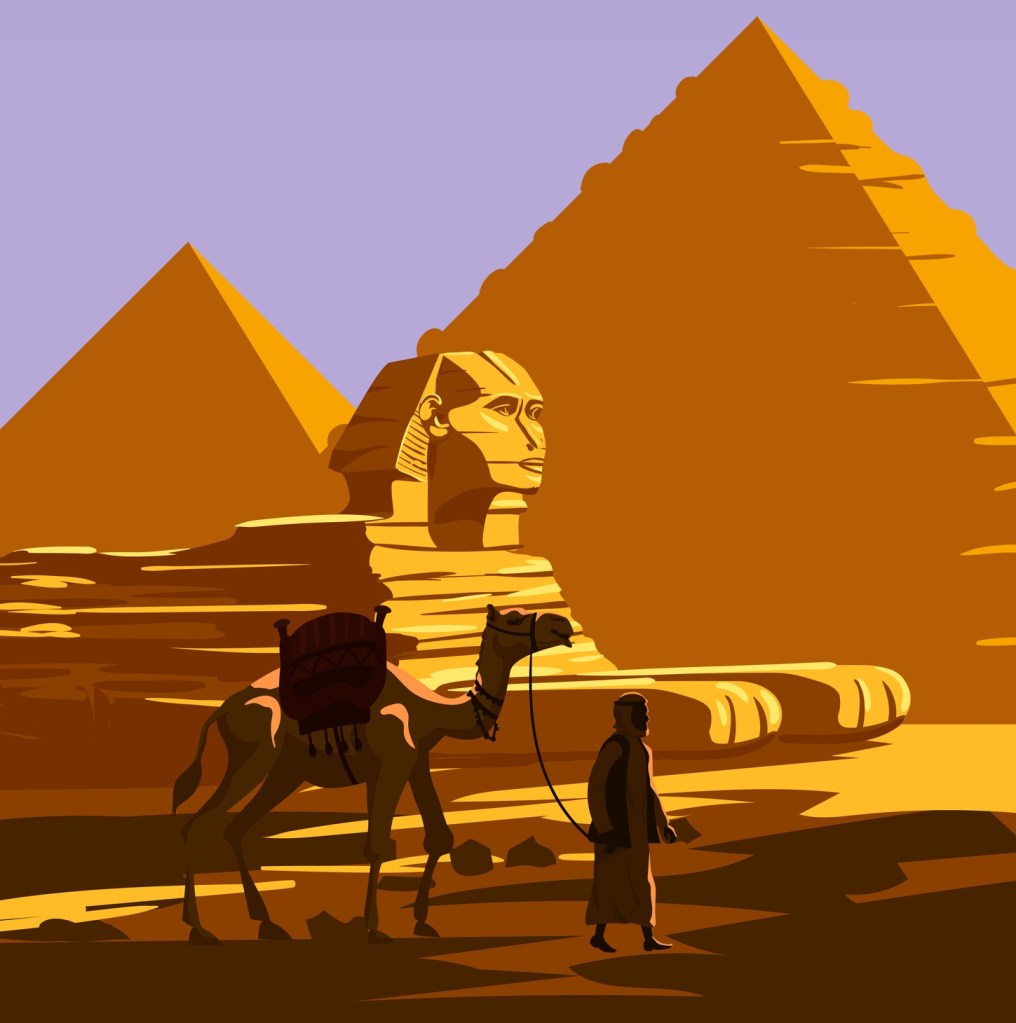
When a famine struck the land of Canaan, instead of trusting God, Abram and Sarai went west to Egypt out of self-preservation. Fearing that when the Egyptians saw Sarai’s beauty, they would kill him and take her, Abram asked Sarai to lie and say that she was his sister. The plan seemed to work because not only was Abram’s life preserved, but Pharaoh gave him many gifts on Sarai’s account. While Abram enjoyed the fruits of his deceit, Sarai was left in a vulnerable place in Pharoah’s harem.
What was Abram’s wife, the future mother of a great nation, doing in Pharaoh’s harem? God stepped in and reset the situation by bringing down plagues on Pharaoh and his household. Pharaoh summoned Abram and accused him sharply, “What is this you have done,” and then sent them packing out of Egypt.
Making it Happen
Abram and Sarai weren’t finished helping God fulfill his promise. Sarai recognized she was too old to conceive, and she came up with a plan. Sarai gave Hagar, her Egyptian slave that Abram acquired when he lied to Pharaoh, to Abram to conceive a child for her. The plan appeared to work, and Hagar gave birth to Ishmael, Abram’s firstborn son. In her jealousy, Sarai mistreated and oppressed Hagar to the point where Hagar took Ishmael and ran for her life. Later Sarai miraculously conceived in her old age, and she gave birth to her firstborn, Abram’s second born, who was Isaac.
Both stories highlight how, despite God’s repeated promises, Abram and Sarai didn’t trust God but tried to accomplish the promise and the blessing on their own terms.
This was a classic example of humans defining what was good and bad, what seemed intuitive to their eyes, ears, and appetites. God was teaching Abram and Sarai the same lesson he taught Adam and Eve – to trust his word and about what is good and bad. If they relied only on what they viewed as good, it would lead them astray. And that’s precisely what happened.
Second Chances
Later God asked Abraham to do the unthinkable: to offer his son Isaac as a sacrifice on one of the mountains that God showed him. God promised, “Through your seed, I’m going to bless the nations of the Earth.” When Abraham asked, can you work with Ishmael, God said no, because that’s the son that you and Sarah came up with by your own scheming. God had then miraculously provided Isaac to them and said that is the son through whom I’m going to bless the nations. But now God asked for this boy’s life.
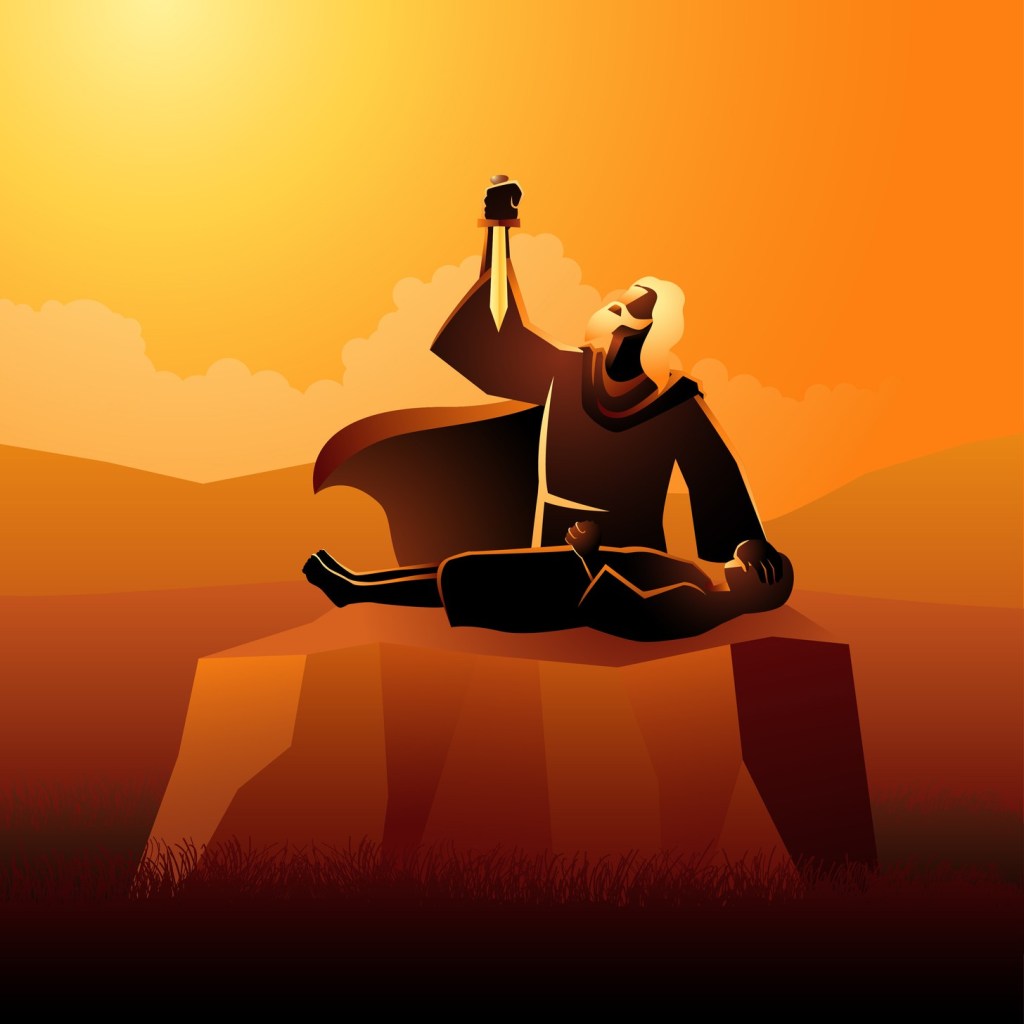
God wanted to give life. But that meant that Abraham would be doing something counterintuitive, and trusting God’s word, over what Abraham thought would lead to life and goodness. God wanted to know if Abraham could surrender everything. Would Abraham trust God’s word about what is good instead of relying on his own intuition? God invited Abraham a second time up the mountaintop to see if he could still partner with this man by seeing if Abraham was willing to surrender everything and trust God. Abraham passed the test, and God knew for certain he had a partner with whom he could work. Abraham’s story showed that God’s kingdom would not come through human striving and engineering (Ishmael) but through surrender and trust (Isaac).
Tree of Fire
Moses, an Israelite, was raised in the house of Pharaoh for the first forty years of his life. After killing an Egyptian who was oppressing a fellow Israelite, Moses fled into the wilderness and lived with the Midianites for another forty years and started a family. Moses had moved on from his Egyptian upbringing and Israelite heritage. Out in the wilderness God met Moses on a mountain in a tree of fire.

God told Moses to take off his sandals because the place where he was standing was holy ground. God’s words were, “This is dangerous, but I invite you in.”
God told Moses that he had seen Egypt oppressing the Israelites, and he was sending Moses to Pharaoh to bring his people out of Egypt. God said to Moses, “Here’s your mission if you choose to accept it.” Moses protested with many questions. Even after God gave Moses two miraculous signs, Moses was not ready to accept the mission. He continued protesting and finally exclaimed, “LORD, please! Send anyone else!” (Ex. 4:12). Moses eventually accepted the mission after God brought Moses’ brother, Aaron, to be his spokesperson before Pharoah.
In Moses’ first mountaintop encounter, God invited him to partner with him to free the Israelites from Pharoah’s oppression. After many protests, Moses reluctantly agreed to accept the mission. Like Abraham, Moses had a follow up mountaintop experience with God.
Me and You, Moses
The Israelites arrived at Mount Sinai exactly two months after they left Egypt. This is the same wilderness mountain where God appeared to Moses in the tree of fire (Ex. 19). While the Israelites were camped at the base of the mountain, Moses ascended Mount Sinai three times.

Instead of appearing as a tree of fire, God descended to Mount Sinai accompanied by thunder, lightning, dense smoke and a loud blast from a ram’s horn, and he invited Moses up the mountain. On the first visit, which lasted forty days, God gave Moses the ten commandments, instructions for building the tabernacle, and laws to help the people live in community. While Moses was on the mountaintop, the Israelites below become restless without him. In God’s words, “They have made for themselves a molten bull calf. They have bowed to it. They have sacrificed to it, saying, these are your gods, Israel, who brought you up from the land of Egypt. My hot anger burns against them. Let me bring an end to them, and I’ll make you into the great nation, Moses.”
God gave Moses an option – you and I could ditch these people. I’ll work with you. You’re my guy. Moses responded by identifying himself with the people instead of separating himself from them and taking God up on his offer. Moses declared that God was the one who told him that these were his ancestors, and God made a promise to the ancestors. Moses was saying, “You can’t break your promise.” God was ready to start over again with Moses, but in Moses God found a willing partner who wouldn’t let go of him or his promise.
Take Me
Moses descended the mountain with the stone tablets, saw the people worshipping the golden calf, lost his temper, and did what God didn’t do. He unleashed violence on the people by breaking the stone tablets. Moses ascended the mountain a second time and pled with God on behalf of the people, “Please, the people have sinned a great sin, please forgive their sin, and if not, please wipe me from the scroll that you have written.”

Moses put himself between God and the Israelites. “These are my people. These are your people. You must take them, if you’re going to take me.” Moses asked God to wipe his name off the scroll if God wouldn’t forgive the people’s sin. God replied to Moses, “Whoever has sinned against me, I will wipe that one off from my scroll. But now, you go, lead the people to where I told you, and I’ll send my messenger to go before your face.“ God accepted Moses’ intercession and told Moses that he will deal with these stubborn people later, but that God’s presence would not accompany them.
We Won’t Move Without You
Moses went up the mountain a third time with a request, “You’ve shown me favour, but you keep saying you’re not going to come with us. Will you come with us?” Moses insisted that if God’s face didn’t go with them, then they’re not moving. Moses created a holy standoff with God. He pushed all the chips into the middle of the table and said we’re not going anywhere without you. God agreed to Moses’ request with one condition, “But listen carefully to everything I command you today. Then I will go ahead of you” (Ex. 34:11).
Moses’ initial mountaintop question in the burning bush moment was, who am I to do this? When he returned with the Israelites to Mount Sinai, Moses first surrendered his identity and then his life for this stubborn group of people. Moses had proven himself, through suffering, trust, and trials in Egypt, to be God’s faithful partner.
In the third trip up the mountain after leaving Egypt, Moses flipped the script. Because of a human (Moses) who ascended and surrendered, God now came down the mountain to be among the people.
Surrender
Abraham surrendered his plans, his definition of good, and his beloved son, to partner with God. Moses surrendered his Egyptian and Midianite identity, and his very life to partner with God.
God didn’t come to Abraham and Moses with a job description for the ideal person to partner with him. God wasn’t really interested in someone satisfying a list of requirements.
God was looking for complete surrender.
Abraham and Moses’ wanderings prior to their mountaintop experiences show that they could not satisfy the requirements. But in the process of surrendering themselves to God as they ascended the hill of the LORD, their lives were transformed, and they became the partners God was seeking.
Up Next
Abraham, Moses and later David, Solomon and Elijah all ascended the hill of the LORD, to partner with God, and each had transformational experiences on the mountain. Psalms 16 to 23 provide a picture of one who took the path of suffering to ascend the hill of the LORD.
Notes:
- BibleProject Transcript, The Mountain Series Podcast, Episode 4, November 18, 2024 – Noah and Abraham Surrender on the Mountain https://bibleproject.com/podcast/noah-and-abraham-surrender-mountain
- BibleProject Transcript, The Mountain Series Podcast, Episode 5, November 25, 2024 – Moses, The Intercessor on Mount Sinai https://bibleproject.com/podcast/moses-intercessor-mount-sinai
 Head and Heart Collide