
Have you ever noticed how two people can look at the same thing and have vastly different perspectives? Sometimes one person can even have a major shift in perspective.
This describes my relationship with Niagara Falls. Growing up I lived twenty minutes away, and I had lots of opportunity to visit the Falls. Visiting became no big deal. In fact, I despised all the touristy glitz surrounding the natural phenomenon of the Falls.
As a young adult I moved about three hours away and rarely visited the Falls. After almost forty years, I saw the Falls up close again, and I was like a child in a candy store. What changed?
(reading time – 11 mins.)
My career as a dam engineer. Now as I stood next to the Falls as a middle-aged man, I felt the ground rumble and experienced the sheer power of millions of bathtubs of water flowing over the falls every minute at fifty-six kilometres an hour and plunging fifty-seven metres to the gorge below.1 It wasn’t just a pretty sight. It was a display of awesome power – waterpower.
What was overly familiar to me as a child had now become fascinating. Two perspectives on the same thing. Something like this describes two of the main characters involved in bringing the Ark of the Covenant to Jerusalem – Uzzah and King David.
In the previous post, Familiar to Forgotten, the Ark was sent away for storage to the house of Abinadab. Almost one hundred years passed before King David decided to bring it to Jerusalem. First Chronicles 13:3 summarizes what happened with the Ark in that time.
It was neglected. No pilgrimages coinciding with annual religious festivals. No seeking God’s direction on national matters.
Politically, a lot happened with the Israelites over that one-hundred-year period. Here is a summary.
A Century of History
Throughout Samuel’s life, he functioned as an itinerant judge and spiritual leader over the Israelite people. Later in life, Samuel appointed his sons, Joel and Abijah, as judges over Israel. However, his sons were greedy for money, and they accepted bribes and perverted justice (1 Sam 8: 1-3). Because of this, the elders of Israel approached Samuel and requested a king.
Samuel anointed Saul the first king of Israel. Saul made a good start, but he listened to the voice of the people instead of trusting in God. God rejected Saul as king and he instructed Samuel to secretly anoint a young shepherd boy, David, as the next king.
Starting with his victory over Goliath, David experienced success and divine blessing. A jealous King Saul hunted David for years attempting to kill him. Eventually Saul sank into madness and ruin, and he and some of his sons were killed in a battle with the Philistines.
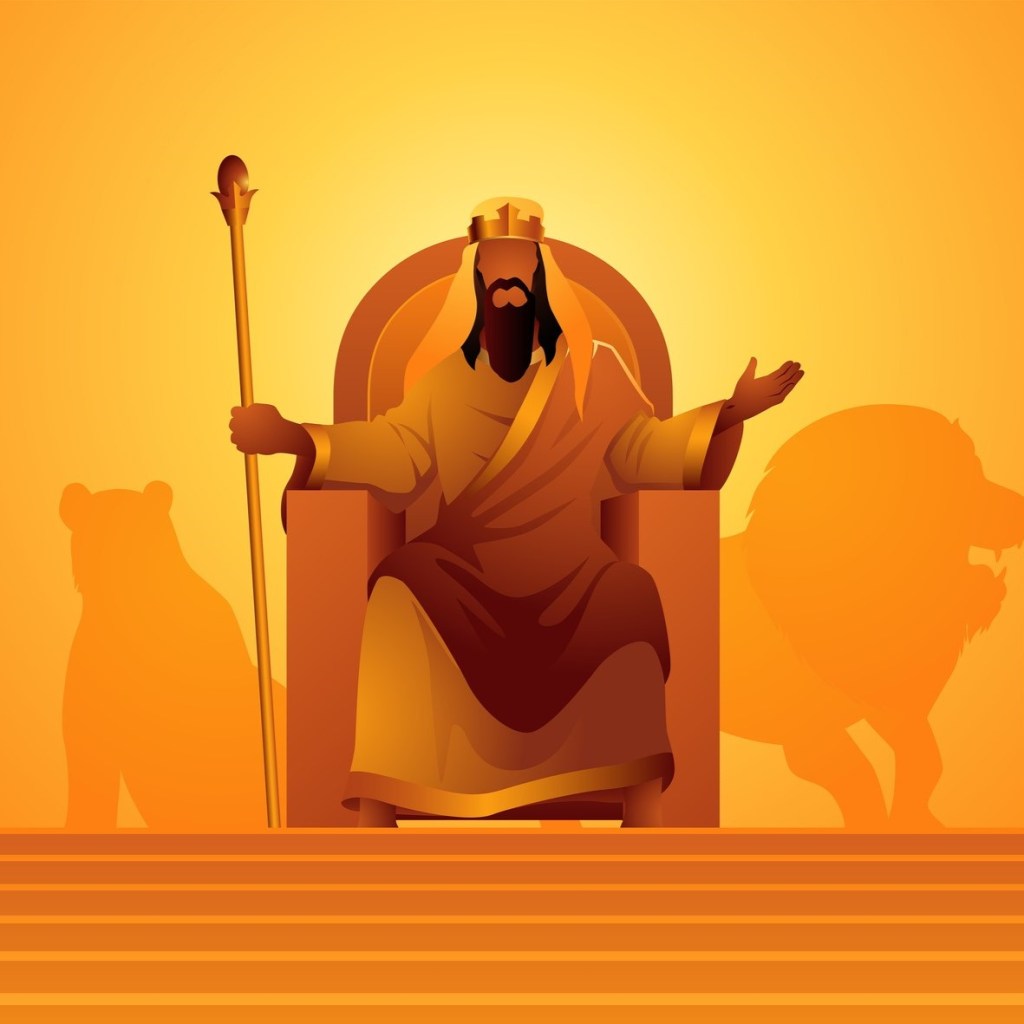
After King Saul’s death, the tribe of Judah made David their king while Abner, the commander of Saul’s army, made Saul’s son Ishbosheth the new king of rule Israel. Seven years later Abner and Ishbosheth argued over one of Saul’s concubines which caused Abner to shift his allegiance to David. The Israelite tribes then came over and asked David to be their king and unify them. David accepted, and the first thing he did as king was to go to Jerusalem, conquer it, establish it as Israel’s capital city, and rename it Zion (2 Sam. 5:1-10).
Bring Back the Ark
David successfully unified the tribes of Israel, established a central capital city and pushed back the pesky Philistines (2 Sam. 5:17-25). The significant missing piece was the religious focus for the nation, and King David looked to remedy the situation.
Why was it important to David to bring the Ark back to Jerusalem?
David recognized it was not enough to have the king’s throne in Jerusalem; but that God’s rule must also be celebrated. In Jerusalem, the Ark would provide a focus that centred the tribes of Israel and Judah on God’s rule, not merely David’s government.
There were two attempts to bring the Ark to Jerusalem, each with a vastly different outcome. The first attempt was unsuccessful and resulted the death of Uzzah (2 Sam. 6: 1-6). The second attempt came three months after the first and was successful. What was the difference in the two attempts?
Attempt Number 1 – Uzzah’s Death
Who was Uzzah, and why did he die? Uzzah was one of the sons of Abinadab, in whose house the Ark had been stored for many years. Uzzah died because he reached out and touched the Ark to prevent it from slipping off its cart when the oxen pulling the cart stumbled.
There were glaring problems with King David’s first attempt to move the Ark when comparing the ox and cart approach to the specific instructions in the mosaic law (Num. 4:5-15). The Ark was to be carried by Levites using poles placed through the rings on the side of the box. First, it was not clear that Abinadab’s family were Levites. Second, the prescribed method for moving the Ark was for Levites to carry it and not for it to be transported by an oxen drawn cart. Third, no one was to touch the Ark, or they would die. And that is exactly what happened to Uzzah.
King David, in his enthusiasm to bring the Ark to Jerusalem, did not do his homework. While he had good intentions, the outcome was a disaster because he failed to follow God’s clear instructions.
What was King David’s reaction to Uzzah’s death? King David was angry because God’s judgment had burst out against Uzzah. King David was also afraid, and he asked, “How can I ever bring the Ark of the Lord back into my care?” In his anger and fear, King David decided to park the Ark in the house of Obed-edom of Gath (a Levite) while David cooled off and considered his next steps.The Ark of the Lord remained there in Obed-edom’s house for three months, and the LORD blessed Obed-edom and his entire household (2 Sam. 6:9-11).
If At First You Don’t Succeed, Try Again!
David was unwilling to move the Ark after Uzzah’s death but three months later he tried again. What happened to inspire this change of heart? First, King David researched how to transport the Ark. David acknowledged his error, “We failed to ask God how to move it properly” (1 Chron. 15:1-12). Second, King David saw how the LORD blessed Obed-edom and his entire household while they were hosting the Ark. He realized that God wanted to bless his people with the Ark and not punish them.

The second procession of the Ark was accompanied by shouts of excitement and triumph, and with the sound of ram’s-horn trumpets. Every six steps a bull and a fattened calf were sacrificed, after which the procession continued. With all his might, King David danced before the LORD. What a difference three months and a humbling education provided.
Two attempts at bringing the Ark to Jerusalem. Two outcomes. And two character stories. I am indebted to Eugene Peterson’s presentation of the contrasting character stories of Uzzah and David, in his book, Leap Over a Wall.
uzzah’s story
Why did God smite Uzzah? A simple answer is he received God’s judgment for his disobedience. But we have a hard time with a loving God killing people. Judgment, yes. But sudden death? Sometimes the Bible raises more questions than it answers.
Peterson writes, “as Christian imagination has reflected on Uzzah’s death, one insight has appeared over and over: it’s fatal to take charge of God. Uzzah is the person who has God in a box and officially assumes responsibility for keeping him safe from the mud and dust of the world.”2 In this imaginative context, Uzzah’s act of steadying the Ark when the oxen stumbled wasn’t a reflexive mistake in the moment but a response from a lifelong obsession of managing the Ark. Uzzah thought he had God where he wanted him, conveniently in a box. But the eventual outcome of this thinking was death for God cannot be managed by people.
In other words, we don’t take care of God; God takes care of us.
In their song, Stand Up Comedy, U2 puts it another way, “Stop helping God across the road like a little old lady.” This was Uzzah’s legacy. The story of Uzzah’s death is a signpost: “Beware of God,” warning us not to become too presumptuous or careless in our relationship with God. We find forgiveness from sins, we believe, we follow and grow in our relationship with God. We grow in Christian responsibility leading and teaching others. This is good.

But then we cross a line – we get bossy and cranky on behalf of God. We take over God’s work and make sure others live well. Over time the basics of reverence, awe, love and faith have shriveled, and we can become dead to God. Jesus referred to such people as “whitewashed tombs … full of dead men’s bones” (Matt. 23:27).3
Uzzah is a warning. His death wasn’t sudden.
It was years in the making as his spirit of praise, faith and worship eroded into a spirit of control and overfamiliarity. Instead of revering the power and majesty of the God of creation, who turned back waters and exploded Gomorrah, he made God into a cozy and commonplace household item.
King David’s Story
King David’s relationship with God was quite different from Uzzah’s. David was never able to take care of God. Quite the opposite. In the years before becoming king, David had been living dangerously – defending sheep from lions and bears, killing a taunting giant, hiding from a jealous king and father-in-law, and battling against marauding Philistines and Amalekites. But in his fighting and running and hiding, David lived in and with God. God was not a sheep that David tended. He was not a tame God. In his early life experiences David had learned to live openly, trusting, and exultant before God.
King David’s response to the ox cart incident was anger and sulking but that did not get him killed. David was both furious and afraid of what happened, but at least he was treating God as God.
David was alive to God in his anger as he was previously alive to God in his worship and praise.
David then did his homework, reassembled the marching band and brought the Ark to Jerusalem in a grand parade. And David danced like no one was looking!
King David’s perspective on God was diametrically opposite to Uzzah’s. David’s previous life experience showed him that God far exceeded his capacity to measure or control. He is a God of mystery and glory. And as David recalled this in the procession, his response was to dance. He was beside himself with love, and awe and wonder. This was no religious duty. As Peterson describes,
“He was worshiping, responding to the living God. He was open to the life of God flowing around and through him, the God whose ways intersected history in a manner defined by that Ark, ways of salvation and revelation and blessing.”4
Signposts

Uzzah and King David are signposts of the warnings we see throughout the scriptures, “Beware!” “The fear of God is the beginning of wisdom!” However, the warnings are not intended to make us timid before God. King David is proof to the contrary. The warnings are intended to prevent us from reducing a holy and untamable God to our own specifications and to be used for our own purposes. They are about interrupting our self preoccupation to address the presence of an awesome God.
Uzzah was comfortable walking beside the Ark – stately, proper, careful, in control and dead.
King David was dancing before the Ark – daring, praising, reckless and alive.
David knew that “the glory of God is a human fully alive” (Irenaeus).5
He knew that it is death to manage God, and its life to let God take care of us.
Up Next
Peak to peak – the Ark’s pilgrimage from Mount Sinai to Mount Zion.
Notes:
- https://niagarafalls.ca/living/about-niagara-falls/facts.aspx
- Eugene Peterson, Leap over a Wall (New York, HarperOne, 1997) 150.
- Eugene Peterson, Leap over a Wall 151.
- Eugene Peterson, Leap over a Wall 152.
- See Hans Urs von Balthesar, The Glory of the Lord, vol. 2 (San Francisco: Ignatius Press, 1984) 75.
 Head and Heart Collide
One thought on “Death and Dancing”