
Have you ever been on a trip with someone you didn’t know very well at the beginning but became very familiar with by the end? Maybe you carpooled on a long drive with a fellow staff member to a seminar or training. Perhaps you embarked on a weeklong canoe camping trip with other camping enthusiasts. By being with someone virtually all the time, you end up getting to know them well. Some of your insights about them are pleasant surprises while others might be shocking revelations. At the end of the experience, you come away with a more complete picture of the person.
(Reading time – 12 min.)
The Israelites had a similar relationship with God’s presence through the Ark of the Covenant. Immediately after receiving the ten commandments on Mount Sinai, amidst the lightning flashes and smoke billowing, the people feared God’s presence and asked Moses to be their intermediator or representative (Ex. 20:18-21). Once the tabernacle and ark were constructed, Moses would go into the holy of holies before the ark where God would speak with him (Ex. 25:22). At their own request, the people kept their distance from God’s direct presence. God’s glory was too much for them to handle.
Conquest of Canaan
When the Israelites came to the Jordan River to enter the promised land, God had instructed Joshua that since the Israelites had not gone this way before, the ark would go ahead of them. As soon as the feet of the priests carrying the ark touched the water, the flow of water was cut off and the river stood up like a wall. God led the way into unfamiliar territory. The priests and the ark remained in the middle of the river until the whole nation of Israel had crossed the river on dry ground (Josh. 3). The miracle of parting the Jordan River demonstrated that God was with Joshua as surely as he had been with Moses. The miracle would impress the power of Israel’s God on the surrounding nations and confirm Israel’s awe of their God (Josh. 4:24-25).
When the Israelites marched around the walls of Jericho, the ark was not leading the procession but rather it was in the centre with the priests and armed men both in front of and behind the ark. For this event, priests carrying ram’s horns led the procession instead of the ark.

God’s presence with the ark featured prominently in the first two miracles as the Israelites began the conquest of Canaan. In crossing the Jordan River, God invited the priests and people to follow him as he led the way. During the march around the walls of Jericho, God invited the people to march in front of and behind the ark, blow horns and shout to make it undeniably clear that this battle belonged to God, not the Israelites’ weapons and skills.
Gilgal, located about three kilometres or two miles northeast of Jericho, became Israel’s base camp and their temporary centre of government and worship during the Canaan invasion. The tabernacle and the ark remained at Gilgal during the conquest. At Gilgal the angelic commander of the LORD’s army appeared to Joshua with further instructions for battle and encouragement for the conquest (Josh. 5:13-15).
On the Move
Once most of the conquest was behind them, the Israelites moved their religious centre from Gilgal to Shiloh where they set up the tabernacle and the ark (Josh. 18:1). At Shiloh Joshua cast sacred lots in the presence of the LORD to determine the land boundaries for the individual tribes of Israel (Josh. 18:10).

The ark is mentioned once more between the time of Joshua and Samuel, when Aaron’s grandson was the high priest, and the ark was now located in Bethel. The tribe of Benjamin was at war with the rest of Israel. After two days of losses, the Israelites went up to Bethel and sought direction from God. The advice to Israel was, “Go tomorrow and I will hand them over to you” (Judges 20:26-28). The Israelites were successful in defeating the Benjamites. See Judges 20 for more details on this unusual story of national infighting.
Eli and Samuel
The next time the ark is mentioned in the Bible is in a story involving Eli the priest, his wicked sons, Hophni and Phinehas, and a young boy named Samuel (1 Sam. 3:3). The ark is back in Shiloh where Eli and his sons are serving in the tabernacle. Why does the Bible call them wicked? Because they treated the Lord ’s offerings with contempt (1 Sam. 2:12-17), and they seduced the women who served at the tabernacle (1 Sam. 2:22). Eli knew of his sons’ evil deeds and asked them to stop. But they wouldn’t listen (1 Sam. 2:22-25).
Samuel was the child Hannah had miraculously received from God. True to her promise, she dedicated him to God, and when he was old enough, she brought him to assist Eli in serving at the tabernacle. The story began with the statement, “in those days messages from the Lord were very rare, and visions were quite uncommon” (1 Sam. 3:1). In the next sentence Samuel was sleeping near the Ark of the Covenant when suddenly God called him by name three separate times. On the third calling Samuel, at Eli’s advice, responded, “Speak, your servant is listening” (1 Sam. 3:10). God came and stood in front of him and told Samuel about the disaster coming to Eli’s sons for their contempt of the priesthood and to Eli for his failure to restrain them. Samuel reluctantly relayed the message of impending judgment to Eli the next morning.

Where is the Glory?
Not long after, the Philistines attacked and defeated the army of Israel, killing 4,000 men. The Israelite elders, puzzled by this loss, decided to bring the ark to the war camp to guarantee the Lord’s presence. The elders would have looked back to the Israelite-Benjamite battle and Joshua’s victory over Jericho and mistakenly thought that where the ark goes victory was inevitable.
They boldly and foolishly assumed that, like a good luck charm, the ark would bring them victory. What they failed to remember from the earlier victorious battles was that the leaders sought God’s direction first before going into battle with the ark. These elders did not seek God’s direction. The ark had become something the elders believed they could manipulate for their own purposes. Like Aladdin’s genie in a bottle, the Israelite elders believed that they had God in a box, and he was going to grant their wish and lead them to victory.
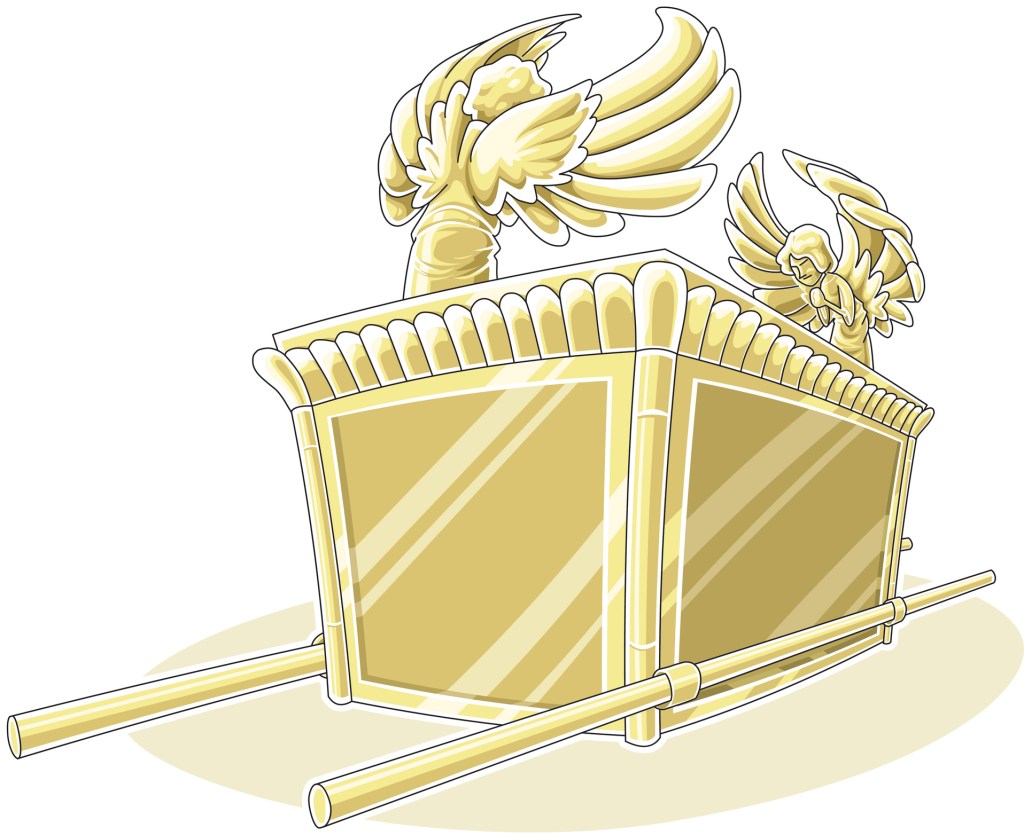
When the ark, accompanied by Eli’s sons Hophni and Phinehas, came into the Israelite camp, it caused a great commotion. The uproar was so loud that when the nearby Philistine camp heard it and realised that the ark of the LORD had arrived, they panicked. Their superstitious response was the same as the Israelite elders. “Who can save us from these mighty gods of Israel? They are the same gods who destroyed the Egyptians with plagues when Israel was in the wilderness” (1 Sam. 4:8-9). However, instead of running in the opposite direction, the Philistine leaders admonished their army, “Fight, as never before, Philistines! If you don’t, we will become the Hebrew slaves just as they have been ours. Stand up like men and fight!” (1 Sam. 4:9).
The Philistines fought desperately, and they slaughtered the Israelite army killing 30,000 soldiers. The ark was captured, and Hophni and Phinehas were killed. When Eli received the news, he fell off his chair, broke his neck and died. Then Phinehas’ wife went into premature labour and gave birth to a son whom she named Ichabod, which means where is the glory, because the ark had been captured and her husband and father-in-law were dead (1 Sam. 4:18-21). God’s judgment was now fulfilled on Eli and his sons.
In contrast to Eli and his sons, the LORD’s presence was with Samuel and, “everything that Samuel said proved reliable” (1 Sam. 3:10). “The Lord continued to appear at Shiloh and gave messages to Samuel at the tabernacle” (1 Sam. 3:21). Like Moses receiving God’s word in the tabernacle, God spoke to Samuel through the ark. What a difference from the beginning of Samuel’s story where messages from the Lord were rare.
Eli’s sons’ contemptible behaviour to God’s presence led to their judgment. In contrast, through Samuel’s humble submission, he became God’s representative and brought God’s words to the Israelites.
The Ark vs. Dagon
The Philistines took the ark to their capital city Ashdod and placed it in their temple next to their own deity, Dagon. The following morning the Dagon statue had fallen prostrate before the ark. The Philistines put Dagon back in his place and the next morning the statue was again face down before the ark but this time with its hands and head broken off. In the ancient world, severed heads and hands were battlefield trophies, so the Lord had vanquished Dagon in Dagon’s own temple.1
By putting the ark in Dagon’s temple, the Philistines believed that they were taking Israel’s deity captive and proving that Dagon was superior. But in a dramatic turn it was Dagon who fell prostrate before the ark. The Philistines had defeated the Israelite army but not their God. This was no genie in a lamp!
After removing Dagon’s head and hands, God’s heavy hand struck the people of Ashdod and surrounding towns with a deadly plague of tumours. Seeing that Israel’s God was against them, the Philistine leaders looked to get rid of the ark. The ark, complete with a box of golden tumours and golden rats, was put on a cart pulled by two cows with no driver. The Philistine leaders watched from a distance as the cart made the trip to Beth-Shemesh, just inside Israel’s border, without any guidance, and they were now convinced that it was the hand of the Lord that brought the plague upon them (1 Sam. 8-10).
Four hundred years had passed since God’s plagues on the Egyptians, but those plagues were not far from the Philistines’ memory (1 Sam. 6:6). In those four centuries between the exodus and the Philistines’ capture of the ark, we have learned the following about God’s relationship with his people:
- God desired to meet regularly and instruct his people how to live well.
- God led his people into unknown territory and helped them conquer the land.
- God affirmed, instructed and encouraged his people as they walked in obedience.
- God provided guidance in matters of decision-making.
- God was not mocked. Repeated disobedience with no repentance led to judgment.
- God could not be contained. He would not do the people’s bidding.
- God could not be subdued. He was above all.
The Philistines discovered that the ark was neither a trophy nor a good luck charm. They learned very quickly what the Israelites, in the time of Eli and his sons, did not comprehend. God’s presence cannot be managed by people. He’s not a predictable or tame God.
Not a Tame God
This reminded me of the of the description of Aslan, the Christ-like character in C.S. Lewis’ The Chronicles of Narnia. In The Lion, The Witch and The Wardrobe, when Lucy was confronted by the idea of Aslan the lion, she asked, “Is he safe?” “Safe?” said Mr. Beaver. “Who said anything about safe? ‘Course he isn’t safe. But he’s good. He’s the King, I tell you.”2 In the portrayal of Aslan, Lewis gave the reader an insight into the tension-filled pair of unrestrained power and unchanging goodness and showed that they can go hand in hand.3

Later when the four Pevensie children have been installed as the kings and queens of Narnia, Aslan quietly slipped away amid the rejoicing. Mr. Beaver remarked, “He’ll be coming and going. Only you mustn’t press him. He’s wild you know. Not like a tame lion.”4 In The Last Battle, Tirian echoed the concept of trying to manage an unrestrained power when he addressed the stubborn dwarfs, “Do you think I keep him in my wallet, fools? Who am I that I could make Aslan appear at my bidding? He’s not a tame lion.”5
When the ark was first in the company of the Israelites, the people experienced the unrestrained power of God’s presence. The glory was too much for them to handle, and Moses became their intercessor. Gradually and imperceptibly, over four centuries, the Israelites’ perception of God’s presence shifted dramatically. The awesome and wild had become familiar and tame. They had contained God’s presence in a golden box.
In The Chronicles of Narnia, the Narnians learned that anyone who crossed paths with Aslan had cause to be uneasy — just as we might when we encounter God — but they knew that he was good. The Israelites had lost that awe before God’s presence. God’s presence had become too familiar, too casual. The Israelites had to relearn that God’s glory was too awesome to be contained or dispensed for their own purposes. God’s glory has its own purposes, and like Samuel we are called into humble service not vice versa.
Up Next
In the final leg of the arks journey from Beth-Shemesh to Jerusalem, we’ll accompany Israel as they reverse their perspective on the Ark of the Covenant, from casual familiarity to an awe of God’s glory.
Notes:
- Kenneth L. Barker and John R. Kohlenberger III, Consulting Editors, The Expositor’s Bible Commentary – Abridged Edition: Old Testament, (Grand Rapids: Zondervan, 1994) 388.
- C.S. Lewis, The Chronicles of Narnia, Book Two – The Lion, The Witch and The Wardrobe, (New York: Harper Collins, 1950) 80.
- C.S. Lewis, The Chronicles of Narnia, Book Seven – The Last Battle, (New York: Harper Collins: 1956) 83.
- The Lion, The Witch and The Wardrobe, 182.
- Raven Richardson (2004) “Not a Tame Lion: What This Does and Does Not Mean,” Inklings Forever: Published Colloquium Proceedings 1997-2016: Vol. 4, Article 22. https://pillars.taylor.edu/inklings_forever/vol4/iss1/22
 Head and Heart Collide