
Today, the pursuit of identity is a popular topic. People tend to identify with others who have shared interests, political ideologies, ethnicity, religion, age, location, etc. There is also a tendency to identify oneself and others based on individual appearance, self-expression, life experience, gender, etc. People have a deep need to be part of a group while at the same time expressing their own individuality.
(11 mins. reading time)
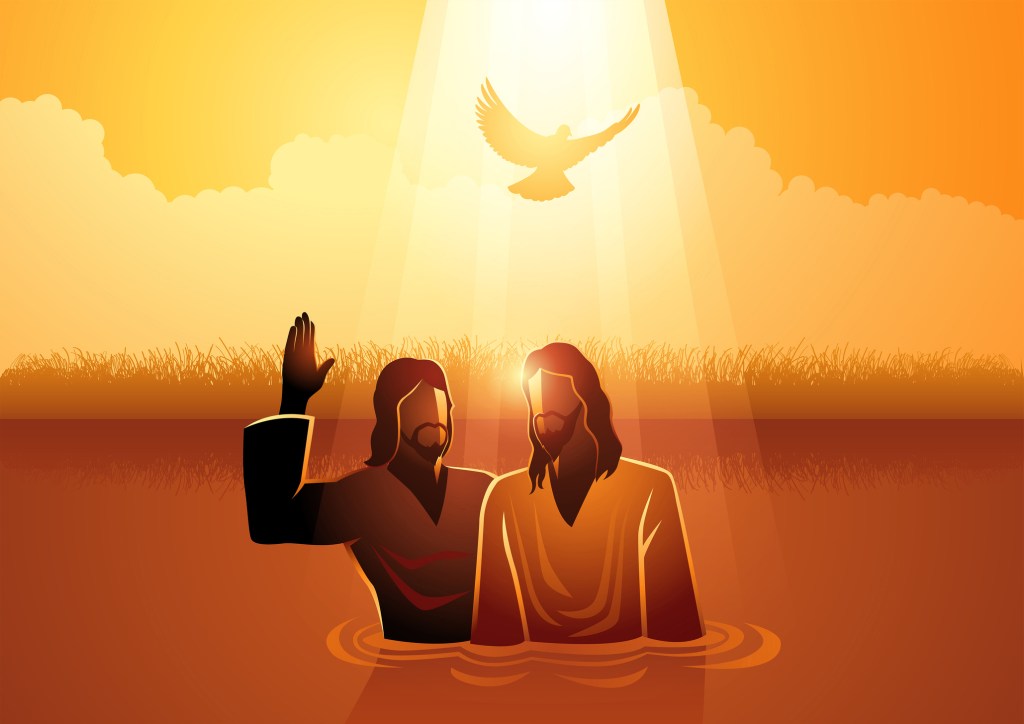
Jesus knew his identity. At his baptism God declared over Jesus, “this is my beloved son in whom I am well pleased.” Knowing his identity gave Jesus strength for his three-year ministry. He knew that he was the anointed one – the Messiah, the Christ. And as the Messiah he was not merely a bridge between heaven and earth, but heaven itself come to earth. Jesus was the new human, the ultimate priest, the cosmic king, God’s heavenly life coming into our world in a new way – a surprising way.
But then he was brutally executed. In the three days between Jesus’ burial and resurrection, his followers must have experienced an identity crisis. In the last three years, they had left their occupations, and in some cases their families, to follow this rabbi who claimed to be the Messiah. They had pinned their hopes and dreams on Jesus being the chosen one, the victorious king to break Rome’s yoke of bondage. Suddenly he was gone, and they were on their own.
After Messiah, what then?
Anointed Ones – The Next Gen
On the third evening after Jesus’ crucifixion, the disciples were behind locked doors because they were afraid of what the Jewish leaders might do to them. Then Jesus appeared in their company and said, “Peace be with you,” and showed them the wounds in his hands and his side. They were overjoyed! Again, he said, “Peace be with you,” and added a commission, “As the Father has sent me, so I am sending you.” He breathed on them and said, “Receive the Holy Spirit,” and he equipped them for their commission by giving them his spirit even though he wouldn’t be with them in body.
In saying, “As the Father has sent me,” Jesus was pointing back to his baptism, his anointing with water and spirit as the Messiah. And in saying, “Receive the Holy Spirit,” Jesus was taking the same Spirit that empowered him to be the anointed one and shared it with his followers, which enabled them to also be anointed ones.
It doesn’t stop there. In the second chapter of Acts at Pentecost there was a larger public anointing. On that day what appeared as flames or tongues of fire rested on all the believers located there and they were filled with the same Holy Spirit. More anointed ones! Jesus spread his anointing out into the world through his followers. The newly anointed followers of Christ were people marked by God’s Spirit to continue Jesus’ mission of filling more and more of earth with the life of heaven.1
Bursting at the Seams
Fast forward a decade to Antioch, the capital of Ancient Syria and a leading city in the eastern Roman Empire. In Antioch there was a community of Messianic Jews and Christ-following Greeks who were eating at each others houses, raising money for the poor and praying for sick people. However, the community needed guidance. On their second missionary journey, Paul and Barnabas began teaching this community of Messianic Jews and Christ following Greeks. What had started as a small Messianic Jewish community in a Greek city expanded into a multicultural house network movement.

A group of Jews who were following Jesus, they might have been called followers of the Way or Nazarenes, which was how followers of Jesus were referred to in the first chapter of Acts. But this was different. It was a new social phenomenon – Jews and Greeks together. What should they call this group now? Here in Antioch they were called Christianos by other people who viewed them as a social group distinct from other groups. They were a new social group with a unique identity.
Insult to Honour
At the time believers were first called Christianos, it was common practice for the Greeks to give satirical nicknames to other groups. Those loyal to the Roman General Pompey were dubbed “Pompeians.” Those who publicly and enthusiastically praised the emperor Nero Augustus received the name Augustinians, meaning “of the party of Augustus.” To the Greeks, it was all a fun word game as well as a verbally dismissive gesture. This new group of Messianic Jews and Christ-following Greeks in Antioch were characterized by behaviour and speech centered on Christ, so the Greeks called them Christianos, or “those of the party of Christ.”2
When used by the local Greeks the term was intended as scorn, insult and mockery.3 As such, believers did not adopt the term Christianos for themselves in the times of the apostles. It wasn’t until the second century when Ignatius, a church leader from Antioch, used the term frequently to describe himself that Christianos stuck as a term of honour.
Suffering Messiah
The term Christianos appears only three times in the New Testament (Acts 11:26; 26:28; 1 Peter 4:16). In the third reference, 1 Peter 4:16, the themes of messiah come together, “But it is no shame to suffer for being a Christian. Praise God for the privilege of being called by his name!” In the believer’s prayer prior to this declaration, Peter connected their sufferings to those of Jesus and the Old Testament messiahs. The suffering messiah theme was pioneered by King David and modeled by Jesus. The believers’ suffering was not to be considered as foreign to their experience but instead to be looked upon as a refining process like the refining of metals.4 The sufferings of Christ became a model of the sufferings of Christians. To be an ‘anointed one’ is to be one outside of Eden who endured the tests of our trust and allegiance.5

The previous post, The Endorsements, showed how the early believers connected Jesus with the Psalm 2 Messiah after Peter and John were released from questioning by the religious leaders. In the believer’s prayer of response to God (Acts 4:23-30), they also related their sufferings to those of Jesus and the Old Testament messiahs.
The Introducing post described the dual theme of the Messiah – the suffering servant and the victorious king. Jesus’ followers were well acquainted with the suffering servant. The theme of believer’s being partners in Christ’s suffering is found throughout the New Testament (Mark 8-10; Acts 9:4-5; Rom. 8:17; Col. 1:24; 1 Peter 2:20-25; 1 Peter 3:14-4:2; 1 Peter 4:12-13).6
To be clear, this suffering of Christ followers is not to be confused with the suffering that comes from making poor choices.
Why Me?

I have noticed suffering is topic that believers in our culture tend to shy away from. Personally, when I experience suffering, my first response is one of surprise followed by, “why me?” Over time I have reframed the question. What makes me so special that I can avoid or sidestep suffering in my life? To quote the dread pirate Robert when he addressed Princess Buttercup in the Princess Bride, “life is pain!” Jesus told his followers, “Here on earth you will have many trials and sorrows. But take heart because I have overcome the world” (John 16:33). Jesus warned his followers about the inevitability of suffering, so why am I so surprised when it happens to me? The following observation about Christian responses to suffering resonated with me.
“I think Protestants, particularly Evangelicals, struggle with suffering because there’s a kind of triumphalism baked into their theology. Catholics are good with suffering. Eastern Orthodox are much better with suffering. It’s built into their theology. And it’s not built into the Evangelical experience. What happens for people in the Evangelical Universe is that they come up against something that their theology just can’t carry the weight of it, and it collapses underneath. And that’s a disservice. Sometimes we just have to learn how to be with it [suffering].”7
I would agree from my experience that in North American Protestantism, there is considerably more emphasis on the victorious king Messiah compared with the suffering servant Messiah. A survey of today’s worship music includes many songs claiming Jesus’ victory but few songs about Jesus walking with us through suffering. In contrast, the book of Psalms includes many laments. The Step into the Ring post showed that the largest group of psalms is laments which occupies nearly one-third of the book.
To what End?
The book of Job is the Bible’s prime case study of one man confronting unexplained suffering in his life. This was the very worst thing happening to the very best person. Job scratches himself with shards of pottery and asks, “Why me?” According to Philip Yancey, in his book Disappointment with God, “the point of the book is not suffering. The point is faith: where is Job when it hurts? How is he responding?8
The book of Job gives no satisfying answers to the question, “Why?” Instead, it substitutes another question, “To what end?”9 Our pastor expressed it this way, “God is more interested in our character than in our comfort.” What happens when we trust in God despite the hardships? Our faith is moved from a “contract faith” – I’ll follow God if he treats me well – to a relationship that could transcend any hardship.10
Life is unfair and hard while we live in the chaos outside of Eden. No one is exempt from tragedy or disappointment – God himself was not exempt. Jesus offered no immunity, no way out but rather a way through it, to the other side.
The Bigger Picture
Paul, instead of providing an answer for suffering, offered a perspective when writing to the Corinthian believers. “That is why we never give up. Though our bodies are dying, our spirits are being renewed every day. For our present troubles are small and won’t last very long. Yet they produce for us a glory that vastly outweighs them and will last forever! So, we don’t look at the troubles we can see now; rather, we fix our gaze on things that cannot be seen. For the things we see now will soon be gone, but the things we cannot see will last forever.” (2 Cor. 4:16-18)
The Bible never belittles human suffering, but it adds one key word: temporary. What we feel now, we will not always feel.11
New Identity
After Messiah, what then?
Jesus took the same Spirit that empowered him to be the anointed one and shared it with his followers enabling them to be anointed ones. Christianos came after the Messiah! Those of the party of Christ – the anointed one – the Messiah.
We who are followers of Christ have become the anointed ones to our generation. We are the bridge to bring heaven to earth. And as messiahs we also inherit the dual role – waiting in suffering followed by victory. We will experience both in our lifetime. Suffering is inevitable and temporary. Jesus walked through it, and he will walk with us through it. It’s part of our identity as Christianos!
Up Next
Psalm 1½
Check it Out
Philip Yancey’s Disappointment with God does a great job of looking at the book of Job and diving into the topic of suffering and hardships.
Notes:
- Bible Project Anointing Script References, https://d1bsmz3sdihplr.cloudfront.net/media/Script%20References/Anointing_Script_References.pdf
- What is the meaning of the term Christian? | GotQuestions.org
- Vine’s Complete Expository Dictionary
- Expositor’s Bible Commentary (Abridged Edition): New Testament
- BibleProject Anointing Episode 6
- Expositor’s Bible Commentary (Abridged Edition): New Testament
- Typology, An Enneagram Podcast, Ian Morgan Cron – Jan. 25, 2024 – Finding Comfort in the Midst of Suffering, feat. Kristin LaValley [S07-28] https://www.typologypodcast.com/podcast/2024/kristenlavalley
- Philip Yancey, Disappointment with God – Three Questions No One Asks Aloud (Grand Rapids: Zondervan, 2015) p184.
- Philip Yancey, p194
- Philip Yancey, p205
- Philip Yancey, p276
 Head and Heart Collide