
What frightens you? Is it the dark, or spiders, or heights, or public speaking, or snakes, or flying, or death? We all have our phobias. In this final speech of Psalm 2, God advises the kings of the earth what they should fear.
(12 mins. reading time)
After the nation’s rant (vs 1-3), God’s response (vs 4-6), and the ‘anointed ones’ declaration of the Davidic covenant (vs 7-9), God sends out a warning and an invitation.
God warned that those who choose to rebel will be met with destruction. God then sends an invitation to submit to him instead and take refuge in him. The invitation seems like a ‘no brainer’ choice.
10 Now then, you kings, act wisely!
Be warned, you rulers of the earth!
11 Serve the Lord with reverent fear,
and rejoice with trembling.
12 Submit to God’s royal son, or he will become angry,
and you will be destroyed in the midst of all your activities—
for his anger flares up in an instant.
But what joy for all who take refuge in him!
The invitation is to serve the Lord with fear and to rejoice with trembling. To me, this is a tension filled pair – fear and rejoicing. (The blog post In Between considers other tension filled pairs in the Psalms.) This pushed me to go deeper to grasp a phrase that has long confused me, ‘the fear of the Lord.’ The word ‘fear’ is used hundreds of times all over the Bible, so it is not something we can easily ignore. To highlight my confusion about fear in the Bible, consider two apparent contradictory examples from Isaiah:
- Make the Lord of Heaven’s Armies holy in your life. He is the one you should fear.
He is the one who should make you tremble. (Isaiah 8:13) - For I hold you by your right hand – I, the Lord your God. And I say to you, ‘Don’t be afraid. I am here to help you. (Isaiah 41:13)
Should I be scared of God, shaking in my boots before him, or should I have the confidence to put my hand in his? What does ‘fear’ mean in these two passages? Are there multiple meanings in the Hebrew for the word fear? There are many words in the English language that have multiple meanings depending on how they are used.

For example, the word ‘run’ is widely used to describe various activities: a computer runs a program, a car runs on gas, a candidate runs for office, an athlete runs a race, a shopper runs up a credit card balance, running a bath, etc. According to a 2011 New York Times article, the word ‘run’ has up to 645 definitions. 1 Now that’s something to fear!
To understand which of the 645 definitions is being applied we need to know the context of how the word ‘run’ is being used in a sentence. The sentence around the word ‘run’ informs us of which definition is appropriate. I decided to approach the word ‘fear’ in the same way I would approach a word like ‘run’ that has multiple meanings. What are the various definitions from the original Hebrew scriptures?
Definition
I used Vine’s Expository Notes2 for definitions of the word ‘fear.’ The most common Hebrew word, used over 330 times, is the verb yare, which has two distinct meanings – to be afraid or to stand in awe. The noun yirah appears forty-five times in the Old Testament and can refer to the ‘fear’ of people, of things, of situations, of God – and it can also mean reverence of God. The noun mora represents a very strong fear or terror, and the noun pahad refers to dread, terror or a threat. Without a Hebrew dictionary, how do we know which one is meant when we are reading the Bible? It’s all about context. Consider the various ways that the characters of the Old Testament expressed ‘fear.’
Context
The very first time we encounter the word fear in the Bible is Adam’s response to God after he ate the forbidden fruit and then hid from God. When God found him, Adam said, “I heard you walking in the garden, so I hid. I was afraid because I was naked” (Gen. 3:1). Adam’s fear was a consequence of his disobedience to God and fear expressed itself in shame.
When Abram and Sarai travelled to Egypt because of a severe famine in their own land, Abram told a half-truth that Sarai was his sister instead of his wife because he was afraid that the Egyptians would kill him and take his beautiful wife (Gen. 12). In this case fear was expressed as a dread of death as well as a need to protect loved ones. Forty years later when Abraham attempted to sacrifice his son Isaac, God intervened and declared he now knew that Abraham truly feared God (Gen. 22). Abraham’s fear was expressed as obedience and worship.
In the days of Egyptian slavery, Moses killed an Egyptian who beat a Hebrew slave, and he hid the body. Moses was afraid for his life when Pharaoh found out and tried to kill him, so Moses fled into the desert of Midian (Ex. 2). Moses’ fear related to death. Forty years later when God called Moses from the burning bush, Moses hid his face because he was afraid to look at God. Moses’ fear was expressed in reverence and worship.
In the examples of Abraham and Moses, we see that the response of their fear ranged from worship to dread depending on the situation.
One of the most familiar verses with the phrase ‘the fear of the Lord’ is Proverbs 1:7, “Fear of the Lord is the beginning of wisdom.” The context of wisdom together with ‘fear of the Lord’ has always confused me. In God’s concluding remarks to the Psalm 2 rebel leaders, he also connected wisdom with fear.
10 Now then, you kings, act wisely!
Be warned, you rulers of the earth!
11 Serve the Lord with reverent fear,
and rejoice with trembling.
Perspective
In his discussion on Proverbs 1:7, Tim Mackie from The Bible Project provided a very insightful and simple explanation for the expression ‘the fear of the Lord’.
“In its essence, the fear of Yahweh means knowing my place in the universe and living accordingly. I’m a tiny little creature, and all my life, my energy, and my knowledge, comes from outside myself, given to me by other people and ultimately by God. What that means is that I’m not the author of my own existence in the world. I’m not the author of what is good and what is not good in the world.” 3
He goes on to ask, who gets to decide the boundary line between right and wrong? In the Bible, God is the one who has the wisdom to make this decision and humans become wise by learning those boundaries and treating people accordingly. What happened when Adam and Eve decided to draw the boundary line? They experienced shame and fear for the first time. This fear was not rooted in God’s wisdom. Its source was human wisdom, which stemmed from a rejection of God’s wisdom.
God understands what is good and evil in the world because it’s his creation. To be wise, we must recognize that our own perspectives are limited compared with God’s perspective. This humble acknowledgement and dependence is called ‘the fear of the Lord.’ This ‘fear of the Lord’ is not to be scared of God but rather, in the words of Tim and Kathy Keller, “to be overwhelmed with wonder before the greatness of God and his love. Fearing God means bowing down before him out of amazement at his glory and beauty.” 4
Feeling Puny
If you want to feel puny, a great way to experience this is to visit some of the amazing landscapes in creation. I had opportunity to stand at the edge of the Grand Canyon and to hike part way up one of the Rocky Mountains. Both were amazing but also somewhat frightful because of my fear of heights. The one amazing spectacle that I lived close to for almost twenty-five years is Niagara Falls. I’ve seen it frozen in winter, lit up at night but what impresses me the most, as an engineer, is the sheer power of the water flowing at 56 kilometres per hour and falling 57 metres to the gorge below. Not only is it very noisy standing next to the falls but you can also feel the ground rumbling from the million bathtubs full of water flowing over the falls every minute! This doesn’t include the massive amounts of water that are redirected upstream at the Sir Adam Beck generating stations which provide electricity to Ontario and New York. 5
While I feel puny next to this display of power, I realize that the power of Niagara Falls is nothing compared with the grandeur of God who created the Falls.

When we have a vision of God’s greatness, we also see our own sinfulness. When God appeared to men in the Bible the results were similar. Abram stretched himself on the ground to listen. Moses hid his face from the burning bush. Isaiah confessed ’Woe is me! I am undone because I am a man of unclean lips.’ Daniel’s vision left him with no strength and in a deep sleep with his face toward the ground. These encounters with God ended all questions between humans and God. 6
The fear of the Lord, “implies that God is at the centre of all existence and power, and that human beings, even kings who are powerful on a human level, are not. Rather they are dependent on God for everything.” 7
‘Fear of the Lord’ Poster Boy
King Nebuchadnezzar experienced the ‘fear of the Lord’ firsthand. When Nebuchadnezzar conquered the little nation of Judah, he met a god who demanded exclusive worship – not just his share among many gods. This new god was different; this god dared to claim that he had made Nebuchadnezzar all that he was.
God allowed Nebuchadnezzar to attempt to kill three of God’s servants (Shadrach, Meshach and Abednego) to teach the king that he really didn’t have power over life and death. While Nebuchadnezzar acknowledged God’s power and commanded his people not to speak against God, he did not submit to the god of the Hebrews. He just added this one to the other gods that the people were already free to worship. 8
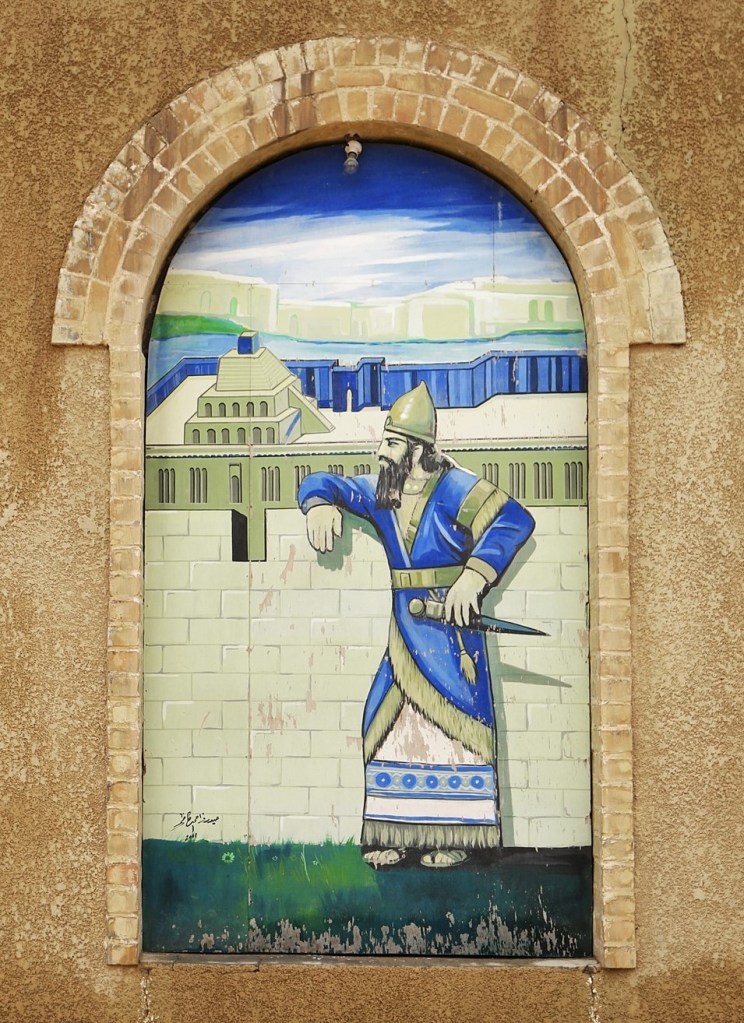
After this event, God warned Nebuchadnezzar in a dream of the danger of his pride. Nebuchadnezzar proclaims, “Look at this great city of Babylon! By my own mighty power, I have built this beautiful city as my royal residence to display my majestic splendor,” and the dream that Daniel interpreted a year earlier was fulfilled. Nebuchadnezzar was driven from human society, lost his sanity and lived like an animal in the wilderness.
After seven years, by divine grace, the humiliated Nebuchadnezzar’s reason returned. His response was to praise, honor, and glorify God as the eternal, omnipotent Sovereign of the universe. He honoured God as the ruler whose kingdom would never end. He acknowledged that humans are as nothing before God. Finally, Nebuchadnezzar saw that God is beyond the control of any human being and accountable to no one (Daniel 4:34-37). 9 Nebuchadnezzar fully comprehended the ‘fear of the Lord.’
Two Postures
Nebuchadnezzar’s vastly differing postures, from before and after his judgment, mirror the choices God was offering to the Psalm 2 rebel kings. To the proud, rebel kings who opposed God, ‘be afraid … be very afraid’ for the judgment of God when it comes, for it will be, “beyond appeasing or postponing.” 10 To the kings who submitted to God and his ‘anointed one’, there is joy and refuge.
It’s ironic that what the rebellious leaders in their pride interpreted as bondage at the beginning of Psalm 2 was in fact security and bliss. What those kings would discover is that there is no refuge from God, only in him. 11
We can be in awe of and even intimidated of the world’s so-called mighty leaders, their organizations and influence. Or we can reduce these people to their proper size by imagining them next to the largeness of God. Psalm 2 rehabilitates the intimidated imagination to grasp the enormity of God. 12
Up Next
How did the New Testament authors interpret Psalm 2?
Notes:
- https://www.npr.org/2011/05/30/136796448/has-run-run-amok-it-has-645-meanings-so-far
- Jerry Vines, Vines Expository Bible Notes (Nashville: Thomas Nelson, 2018)
- BibleProject Reflections Podcast, Episode 22 – How to Live Wisely – What does it mean to fear God and to be wise? May 19, 2021. https://bibleproject.com/podcast/how-to-live-wisely/
- Tim and Kathy Keller, The Meaning of Marriage (New York: Penguin Books, 2011) p68.
- https://niagarafalls.ca/living/about-niagara-falls/facts.aspx
- A.W. Tozer, The Knowledge of the Holy (San Francisco: Harper & Row, 1961) p77-78.
- Tremper Longman III, Tyndale Old Testament Commentaries, Psalms (Downers Grove: InterVarsity Press, 2014) p62.
- NLT Life Application Study Bible Commentary, Third Edition (Carol Stream: Tyndale House, 2019) p1413.
- Kenneth L. Barker, John R. Kohlenberger III, Expositors Bible Commentary (Abridged Edition) Old Testament (Grand Rapids: Zondervan, 2004)
- Derek Kidner, Kidner Classic Commentaries – Psalms 1-72 (Downers Grove: InterVarsity Press, 1973) p69.
- Kidner, p70.
- Eugene Peterson, Answering God (San Francisco: Harper Collins, 1989) p31.
 Head and Heart Collide