
How would you answer this question – what is humanity’s greatest achievement in the past 100 years? Creating vaccines? Breaking the DNA code? Splitting the atom? Creating the internet? Breaking the four-minute mile? Summitting Mt. Everest?
(8 mins. reading time)
Being a science nerd, I would answer with the 1969 moon landing. I was only a young lad at the time, but I remember it vividly. The event captured my imagination and contributed to my enthusiasm for science. Psalm 2 begins with the kings and rulers of earth planning a great event.
Power Play
If the first psalm is a macro lens on the individual, then the second psalm is a wide-angle lens on humanity.1 Psalm 2 is not a person standing at the crossroads deciding which way to go. Instead, nations are combining forces and planning a full out rebellion against God.
1Why are the nations so angry? Why do they waste their time with futile plans?
2 The kings of the earth prepare for battle; the rulers plot together against the Lord and against his anointed one.
3 “Let us break their chains,” they cry, “and free ourselves from slavery to God.”
Psalm 2 begins with humanity’s blustering and posturing about their big plans to break free from God’s authority. Like the beginning of Psalm 1, there is a three-fold progression with each verse building on the preceding verse. Verse 1 begins by expressing the anger of the nations. The second verse builds on the muttering of the angry kings and rulers by showing them uniting against the Lord. The third verse provides their resolve for the battle preparation, “Let us break their chains and free ourselves from slavery to God.”

The goal of the rebellion is lordship. The people do not want to be ruled over by God and his representative. They do not want to be told how to live their lives. They want to break their chains and be freed from slavery to God.
Perspective
Hosea 11:4 uses the similar language to verse 3 (ropes vs. chains and yoke vs. slavery), however he it uses a very different tone, “I led Israel along with my ropes of kindness and love. I lifted the yoke from his neck, and I myself stooped to feed him.” Jesus speaks in a similar tone to Hosea’s when he invites the people to take his yoke upon them and learn from him for, he is and humble and gentle of heart, and they will find rest for their souls (Matt. 11:29-30).

The Psalm 2 rulers do not speak of kindness, love and rest. Their talk is about chains and slavery. They resist God’s authority and resent God’s boundaries. God’s boundaries are there because he loves humans and knows the boundaries will prevent them from hurting themselves and each other. But that’s not how people see God’s good boundaries. They see God’s boundaries as obstacles to their freedom. So they rebel against God.
Babel
There are plenty of occurrences of human rebellion in the Bible. For an example, let’s go back 1,200 years before King David to Nimrod who founded Babylon. Following Noah and the flood, God blesses the people and commands them to “increase and fill the earth” (Genesis 9:1). What does humanity decide to do? Exactly the opposite. Organized by the first dictator in human history, Nimrod whose name coincidentally means “let us rebel”, humanity decides to build a great city.

The Tower of Babel is the focal point of the city. The tower was most likely a ziggurat, a monument built to showcase the people’s greatness, something for the whole world to see. “This will make us famous and keep us from being scattered all over the world” (Gen. 11:4). In the ancient world ziggurats were constructed as stairways to heaven. The purpose was not for people to ascend into heaven but for the gods to descend from heaven to bless the people. The Tower of Babel has been estimated to be 400m square at the base and 200m high (8 stories) constructed using earth-baked bricks. 2
Disobedience and pride go hand in hand. The people have come together in disobedience to build the city, and in pride to make a reputation for themselves by building the tower. Like Adam and Eve, they do not trust God’s wisdom and instructions. They want to do it their own way. There’s only one problem in all their planning. They didn’t consider the enormity of God.
In response God accepts their invitation and comes down to inspect their little stairway to heaven before it is complete. God then takes the one thing that unified them, language and words, and scrambles it ensuring that the people congregate with others of the same language and settle in other parts of the world. The thing that God commanded, and humanity feared the most, being scattered, is in the end accomplished. Human rebellion against God fails. That is why the psalm opens with, “why do they waste their time with futile plans?”
look to the sky
History is full of humanity’s amazing accomplishments accompanied by people celebrating their collective greatness while they totally ignore the creator. When searching the internet for top ten human accomplishments, the moon landing was frequently suggested as the first choice. One of the sites had a quote about the moon landing that echoes the words of the kings and rulers in Psalm 2.
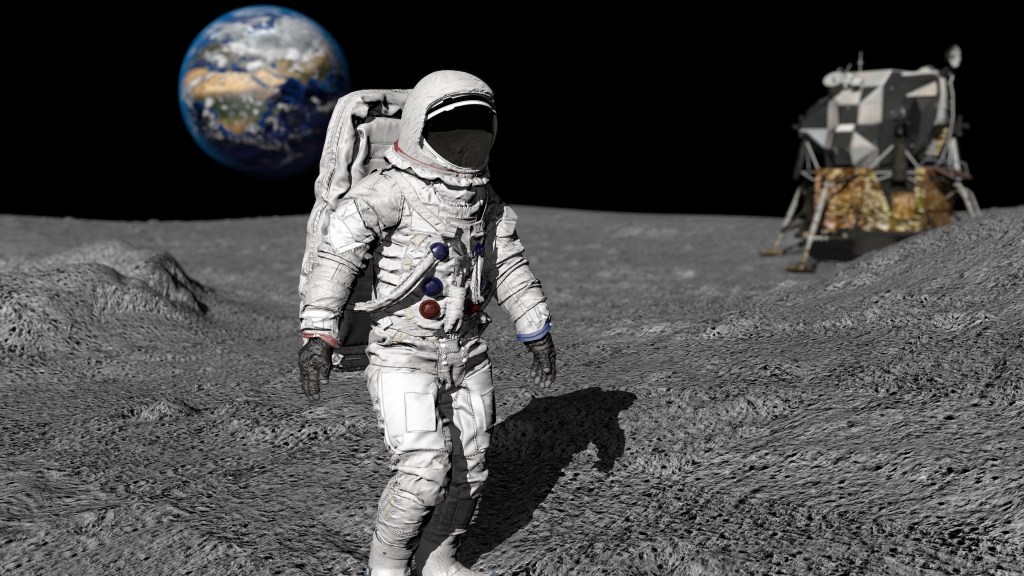
“It [the moon landing] is our greatest achievement because it supersedes God for the first time in thousands of years. Religion has stagnated the human race because the questions it asks cannot be answered. So, we no longer need to look to the sky to see God, we see the solar system and possibilities for investigation in and beyond it and this will continue to allow the human race to strive and therefore survive.” 3
When King David looked at the sky, he did not imagine it as a way to supersede God but quite the opposite. The sky pointed to the greatness of God. David was awestruck and he wrote about it in Psalm 19.
1The heavens proclaim the glory of God.
The skies display his craftsmanship.
2 Day after day they continue to speak;
night after night they make him known.
3 They speak without a sound or word;
their voice is never heard.
4 Yet their message has gone throughout the earth,
and their words to all the world.
The Psalm 33 author also sings of the greatness of creator God.
6 The Lord merely spoke,
and the heavens were created.
He breathed the word,
and all the stars were born.
7 He assigned the sea its boundaries
and locked the oceans in vast reservoirs.
8 Let the whole world fear the Lord,
and let everyone stand in awe of him.
9 For when he spoke, the world began!
It appeared at his command.
10 The Lord frustrates the plans of the nations
and thwarts all their schemes.
11 But the Lord’s plans stand firm forever;
his intentions can never be shaken.
For good measure, the psalmist reminds the readers where the schemes of the nations, like Nimrod and the Psalm 2 kings and rulers, will end up. God will have his way despite all the nations scheming. God’s world is much larger than humanity’s world. Even though humanity can accomplish great things, they have nothing over the creator.
Which World do We See?
Psalm 2 wants to show us that the world of God is far larger than the world of human accomplishments. Eugene Peterson notes, “What is at issue here is size: we require an act of imagination that enables us to see that the world of God is large – far larger than the worlds of kings and princes, prime ministers and presidents. We need a way to imagine – to see – that the world of God’s ruling word is not an afterthought to the worlds of the stock exchange, the rocket launching, and summit diplomacy, but itself contains them.” 4

When the Babylonians were strutting about in their city, building their tower and thinking that they were “all that and a bag of chips,” God came down and gave them the proper perspective. Psalm 2 sets out to do the same thing, not only for the Israelite community but for the entire world. In the words of Peterson,
“We need a way, a convincing, useable, accessible tool for realizing the largeness of God in the midst of the competing bigness of the world”. 5
Psalm 2 answers our need – God’s invasion into the nation of Israel and the larger secular world.
Up Next
How to build a Messiah bridge
Tip
If you’re a science nerd who is fascinated with the 1969 moon landing, check out Levi Lusko’s book, The Last Supper on the Moon – NASA’S 1969 Lunar Voyage, Jesus Christ’s Bloody Death, and the Fantastic Quest to Conquer Inner Space.
Notes:
- Eugene Peterson, Praying with the Psalms (New York: Harper Collins, 1993).
- Samuel T. Jordan, The Timechart of Biblical History (Edison: Chartwell Books, 2002)
- https://www.thetoptens.com/list/man-achievements/
- Eugene Peterson, Answering God: The Psalms as Tools of Prayer (San Fransisco: Harper & Row, 1989) p29.
- Peterson, Answering God, p29.
 Head and Heart Collide
2 thoughts on “Big Plans”