Have you ever noticed how professional athletes prepare for competition?
(9 mins. reading time)
Whether its hockey players sitting in the dressing room with a playlist streaming through their ear buds or the baseball players “walk up” song as they approach the plate, the music’s purpose is the same: to energize them, to pump up the audience, and in turn to pump the athlete up to perform well. It’s not limited to elite athletes. Any day we observe joggers on the street or in the park.
In the movie, The Holiday, Jack Black plays Miles, a music composer. Miles’ friend Arthur, a retired movie director, is reluctant to attend an award ceremony in his own honour because, “who wants to see some old codger get an award?” Because of his limited mobility Arthur is embarrassed that he won’t be able to walk up the aisle and climb the stairs to the platform. Miles writes a melody to pump up Arthur and give him his own walk-up song. Miles explains, “Every time he hears it, it will give him the confidence to walk up. It sounds like him – it’s cheeky!”1
Music as A Time Machine
The effects of music can be intentional, by providing messaging, rallying people together, and boosting motivation. The effects of music can also be coincidental. By coincidental, I am referring to the ability of music or specific songs to evoke memories.
“Songs connect with memories taking us back in time.”
Replaying music from the past brings us back to the places, people or events that were associated with the music at the time we were listening to it. This is one reason why radio still plays “Oldies”.
The music associated with an event becomes a retrieval cue to bring the occasion from the recesses of our memory to the forefront. For me, whenever I hear a song from U2’s October album, I’m transported back to my parents’ basement when I first heard the album during high school. The dark paneling on the walls, the shaved green carpet on concrete floor, the dim basement lighting, my Pioneer receiver, Soma speakers and Kenwood turntable are all connected with the album.
Cue Music
Movie soundtracks are another excellent example of the power of music. To get more insight on movie soundtracks, I turned to my middle daughter whose favourite music genre is movie soundtracks.2 Movies use music very effectively in many ways including:
Connecting a character with a melody or theme
Developing a character and their theme at the same pace
Echoing the emotion of a character or scene
Cues for settings, environments, or events
Cues for a character’s emotions, or how the audience should be feeling
If you doubt the impact of music soundtracks, I suggest watching an older version of one of Jane Austen’s novels. In a 1980 version of Pride and Prejudice, there is no music except at the beginning and end of the movie. I doesn’t take very long before I get bored with the movie even though I am a Pride and Prejudice fan. Without a music soundtrack, I am not interested in watching the movie no matter how compelling the story or the acting.
Connecting a Character with a Theme
Similar to Arthur’s “walk up” song, movie soundtracks prepare an individual music theme to correspond to a specific character. The music theme matches the character. The theme is repeated when the character appears and eventually the audience associates the character with the theme. Playing the theme in the absence of the character, the audience is cued that the character will appear shortly, or that the character is being thought of or referenced.
A classic example of this is the movie, Jaws.
“Ba-dum! Ba-dum! Two notes and you have a villain!”
The theme is basic and primal which effectively echoes the character of the shark. Another example is the Death Star theme in Star Wars. In addition to cueing up the audience that the Death Star is about to appear, the theme can evoke the emotions associated with the character or scene. In each case, the villain’s theme in Jaws and Star Wars evoke suspense and fear reactions simply by playing the theme music.
The Incredibles – Developing a Character with a Theme
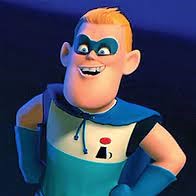
Buddy
An example of how music themes are used to mirror the development of a main character is in the first installment of The Incredibles. Buddy, the boy who adores Mr. Incredible and wants to be his sidekick, is introduced by composer Michael Giacchino with a flute theme that is innocent, happy and adventurous.
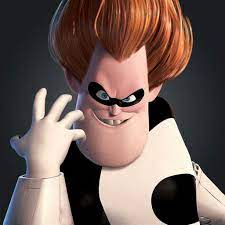
Syndrome
Later in the movie, when Buddy is transformed into the villain, Syndrome, the same music theme is played except that it is slower, methodical, using violins instead of flutes, and is played in a minor key instead of a major key.
It’s the same melody but changes have been made to mimic the character progression from an innocent boy to a calculating villain.
How to Train Your Dragon – Echoing the Scene
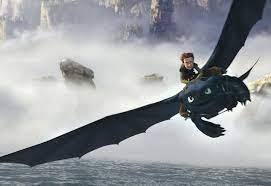
Crucial movie scenes include music to match the action. John Powell, the composer of Dreamworks How to Train Your Dragon echoes the dramatic scene, Test Drive, using the melodies developed for the two main characters, Hiccup the boy and Toothless the dragon.
To set up the test drive scene, Hiccup has built and equipped the injured dragon with a fabric half tail that Hiccup controls with his foot. On the test drive the music begins with Hiccup’s theme as he is controlling the tail with a foot actuator. At one point in the flight Hiccup grabs for his instructions or cheat sheet as it blows away, resulting in him falling off of Toothless towards the frigid waters below. Toothless dives after him accompanied by chaotic music. Averting disaster Toothless catches Hiccup, and the music plays Toothless’ theme as he has control in this moment. Then Hiccup throws away the cheat sheet he was clinging to, realizing that he needs to trust his instincts and they need to trust each other.
At the moment where they both gain control and work together, the music changes from chaotic to a triumphant layering of both Hiccup’s and Toothless’ themes overtop of each other.4 If you closed your eyes during the scene sequence, the music alone would tell you what was happening.
Lord of the Rings – Cues for Settings or Environments
My personal favourite movie, Lord of the Rings (with music by Howard Shore), has many examples where the music is a cue for a setting or environment. Cue the Sauron/Mordor theme. It’s a shrill theme using violins playing in a minor key that churns up the stomach. Whenever Sauron or the land of Mordor are portrayed, you hear the shrill theme. At the end of the movie (spoiler alert) when Sauron is defeated the same melody is played except it’s done in a major key instead of a minor key. Trumpets and choral music are added to give the updated theme a triumphant sound.
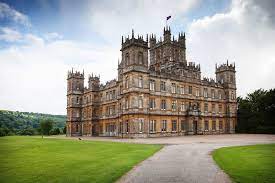
Downton Abbey – Cues for Scene Emotions
So far, all the examples have been from action or adventure movies. How about one of my wife’s favourites for a change – Downton Abbey! In this example, composer John Lunn illustrates both using music to cue emotions for a scene and using a music theme to point to another part of the story.
In one of the episodes, Lord Grantham, or Robert, the patriarch of an early 1900s British aristocratic family, kisses the house maid, Jane, on three different occasions. Jane gives her notice and leaves, ending the possibility of an affair between the two. The kissing scenes are accompanied by a specific music theme.
Several seasons later there is an episode where an art dealer is flirting with Cora, Robert’s wife. However, Cora rebuffs the art dealer when his advances go too far. When Robert suspects Cora is having an affair, he confronts her and Cora responds with, “tell me you have never let a flirtation get out of hand.” Cue the melody from the earlier scenes when Robert kissed Jane, and Robert immediately feels guilty.
Instead of using a flashback, the melody from Robert’s previous flirtation scenes is used to tell the audience that Robert remembers his own indiscretions. The flirtation theme previously developed is used to point back to a previous and specific scene in the story. (These are the only times you hear this melody in six seasons.)
What Do Music Cues Have to do with Psalms?
I began this blog looking at the power of music to not only pump us up but also to take us back in time. We saw how movie soundtracks employ a similar strategy by cueing up the audience for specific characters, locations, scenes, or emotions.
“It is in the repetition of individual themes that the soundtrack is able to develop the retrieval cues that engage the audiences’ emotions. The power is in the repetition of the theme.”
When we look at the Bible as a whole book, we discover that there are numerous themes running throughout. As we encounter a theme, the questions to ask are:
Where have we encountered this before?
Why is it significant?
In the way that repetitive musical themes cue movie audiences to feel a particular emotion or to set up a scene, I believe that the recurring themes running throughout the Bible are pointing us to something bigger than the individual passage that is before us. The scenes come alive when they are read or understood as being part of a larger theme, and not an individual story or section. This applies not only to the Bible, but to the book of Psalms as well. We will encounter this in Psalm 1 when we look at the tree and the streams of water themes.
Up Next
After the tangent into music over the past two posts, next week we will take a bird’s eye look at the book of Psalms.
Your Turn
Do you have a favourite song or music theme that you use as an alarm, reminder or notification?

 Head and Heart Collide